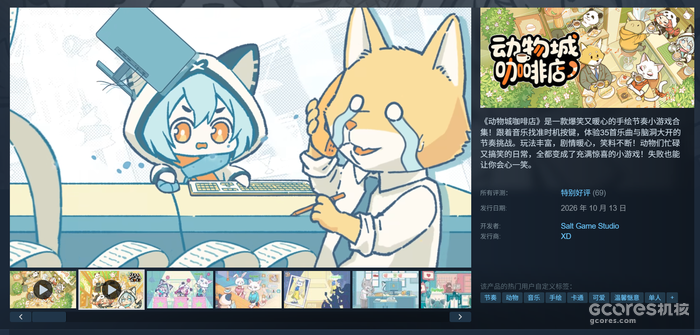
“Zootopia Cafe” developed by Jar of Salt Studio and published by XD is an intuitive rhythm game that uses hand-drawn art, original music and daily stories. Players will gradually get to know the residents living in Animal City as the manager of the corner coffee shop. The game will be officially launched on Steam on October 13, 2026.
In the game, Mr. Dog has to deal with the boss’s pie, his colleagues’ melons, and the boss’s pot; the panda Pan Youxian is busy shaking spoons and repairing water pipes, and the cat Bai Lemei is pushed in front of the variety show camera. Going to work, cooking, and working part-time, the busy and trivial daily lives of these animal residents have been reinterpreted into a series of mini-games. The game does not have dense musical notes or complex key combinations: just listen to the music, catch the beat, and press the keys at the right time to successfully pass the level.
Focusing on the creative starting point of “how daily life becomes rhythm”, JiHe recently had a chat with the producer Yijia Salt about the game’s design ideas, the relationship between music and levels, and the development process from demo to complete work.

The following is the text of the interview
Q1. The most special thing about “Zootopia Cafe” is that it turns the animals’ specific daily lives into a rhythm mini-game. When you first conceived the game, did you decide on the animal characters first, or did you first decide on the core gameplay of “making a rhythm game out of daily life”? How do the two come together?
A. The first thing to determine is daily life. From the very beginning, we wanted to express the smoky little things in life in the form of rhythm levels: it may be a daily routine at work, or it may be trivial matters at home. The workplace is not the focus of the game, it is just a part of daily life, but the images of “social animals” and dogs are too deeply rooted in people’s hearts (laughs).
In fact, we made many attempts in the early days, including using real people, real animals, and even characters from “Going Away”, but none of them quite met our setting and expression needs. Later, we felt that animal anthropomorphism was more in line with the core expression of “people are social animals”, so we created Animal City. Plus, anthropomorphic animals are really cute!
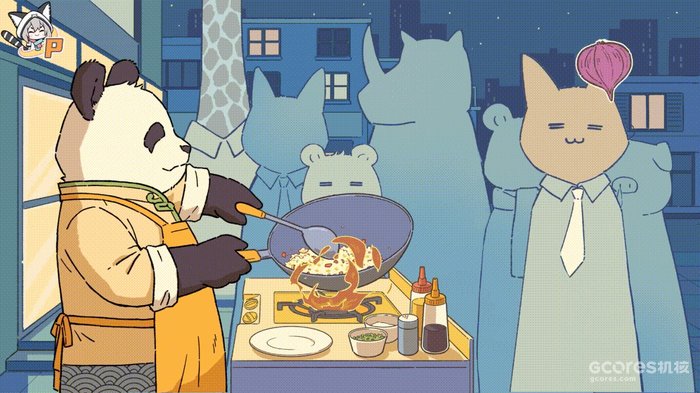
Q2. Most of the game’s current gameplay is based on simple and intuitive “click rhythm”, rather than the multi-track, direction keys or complex operations common in traditional audio games. Why choose this approach? How is it different from a work like “Rhythm Heaven”?
A. “Click Rhythm” is a lot of fun in itself. For example, when people listen to others singing in KTV, they often clap along with the rhythm: some people always clap in a fixed time, some people are used to clapping on the back beat, some people will clap empty and then clap again, and some people who are familiar with the songs will clap according to the lyrics and melody. Many people can perceive and enjoy different rhythm patterns, but they may not necessarily be able to actively create these rhythm patterns.
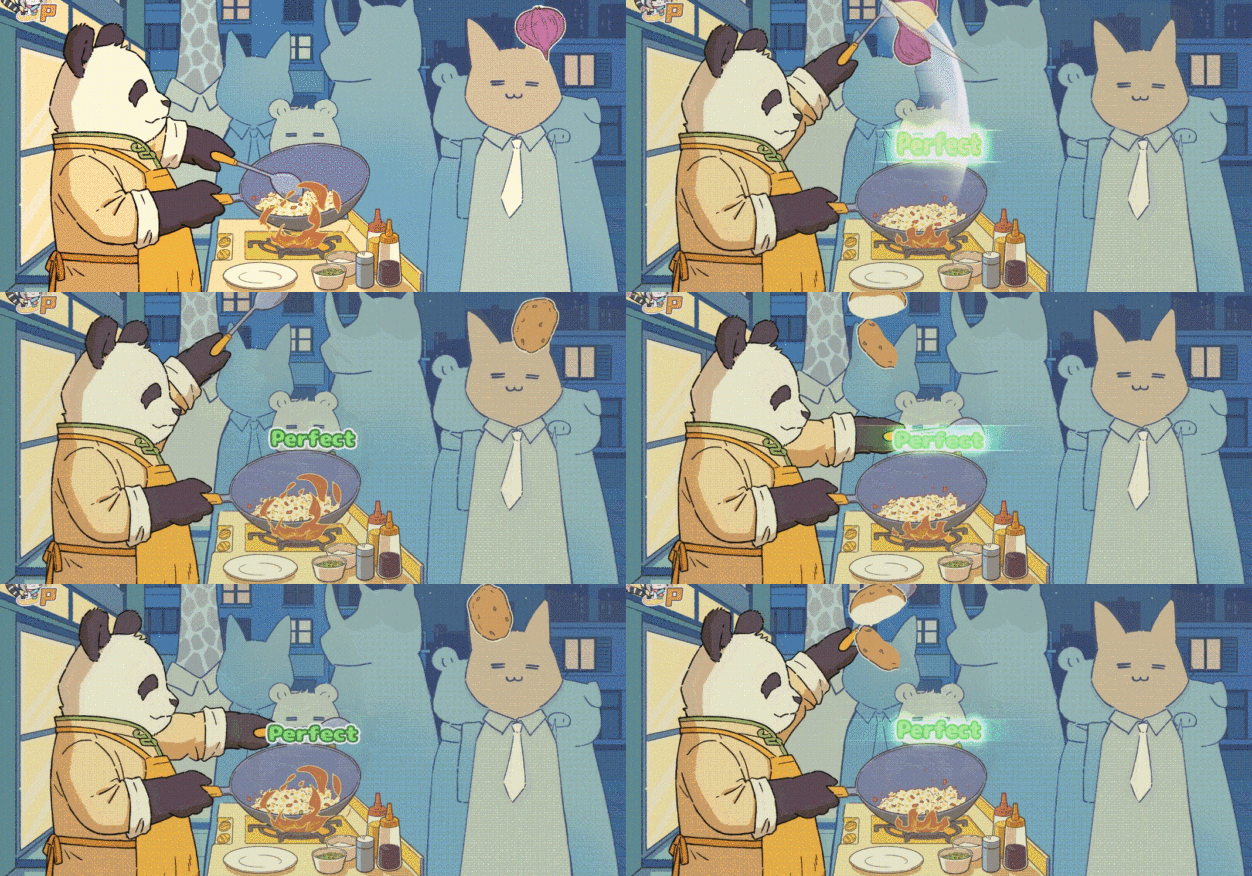
“Zootopia Cafe” is actually breaking down the rhythm pattern and letting players have fun with it. It is not just “clicking the rhythm”, but trying to find the relationship between the rhythm pattern and the music, and then allowing the player to accurately hit the rhythm anchor point. This is very different from watching the notes fall into the judgment area and pressing the button to get Perfect.
This gameplay of dismantling rhythm was pioneered by “Rhythm Heaven”. We also pay tribute to our predecessors in some levels, and hope to explore where this core gameplay can be extended. Traditional rhythm music games sometimes encounter problems such as too simple level content, high production costs for a single level, and difficulty in mass production. Therefore, we try to add designs such as multi-key, sound direction, and melody memory, hoping to give music game players a sense of familiarity and a fresh experience. The game also supports adjusting the difficulty to make it easier for new players to get started.
Q3. Officials have mentioned that the game will incorporate daily sounds such as pots and pans and various sounds at work into original music. Where do inspiration usually come from when making music and levels? Should we have music first and then find a suitable scene, or should we determine the specific life scene first and then make it into a song?
A. We start from specific life scenes and create music based on plots, scenes, characters and level charts. In this way, the consistency of the gameplay, characters, plot and world view will be stronger; if it were the other way around, it would easily become that everything serves the music, which is a bit putting the cart before the horse.
There are actually many restrictions on music creation. Whether the BPM is too high or too low will affect the difficulty. You must also consider whether the characters, plot and music style match, and leave enough “rhythm space” for prompt sound effects. The most important thing is whether the chart and the music can fit together. Many times, music also plays the role of prompting the gameplay, at least not cluttering the gameplay, so the creative challenge is not small.
The levels are mostly inspired by the characters. We will first determine the core values of the worldview and story, and then create characters such as Huang Shangjin and Bai Lemei. After the character’s personality, occupation, story biography and story point are determined, the levels usually emerge naturally. We hope that there will be a big main line that allows each character to grow, and that each level will independently become a daily life scene. There will also be a plot in it, and the whole thing will be a bit like a unit drama.
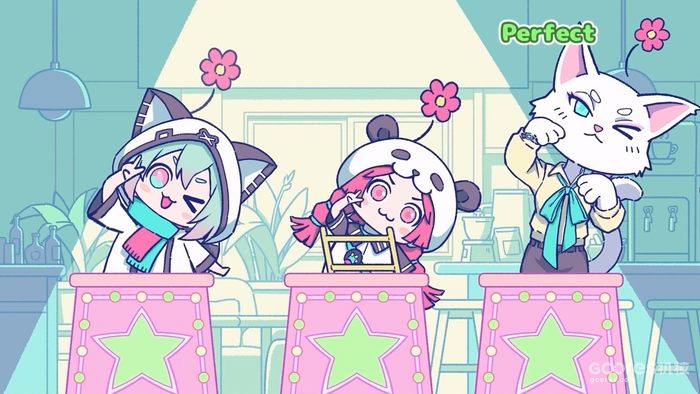
Q4. During the trial play, it can be clearly felt that the character’s movements, expressions and various funny feedbacks are themselves part of the rhythm experience. For you, does the music drive the animation, or do both the animation and the music set the pace? When they conflict, what will take precedence?
A. The expression of pyrotechnics, that is, the story, and the rhythm of the level gameplay itself are the core; music and pictures play more of a packaging role.
We will first prepare many core gameplay methods, such as single key, double key, multi-key, direction, melody, long press and imitation, etc. We will also prepare different rhythm patterns such as forebeat, backbeat, triple beat, floating point beat, etc. After the characters and the content of the level are determined, we can then determine which gameplay and rhythm are more suitable for this level. Music is often the last link and needs to serve the previous design.
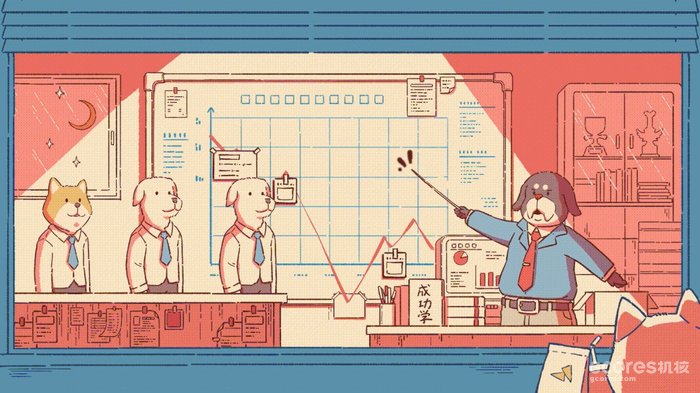
For example, Huang Shangjin is a social animal, and the levels revolve around the workplace. Although the content is easily resonant, it may also awaken some unpleasant emotions. Therefore, we use playful jazz to dispel negative emotions. Of course, exaggerated visual expressions and memes also play a role. However, jazz music is heavy on melody, has randomness, and the sound information is relatively dense, which can easily make the auditory sense of the level appear bloated and miss the key points, so in the end, deletions and trade-offs have to be made.
After discussion, Bai Lemei chose CITY POP for the level to show the character’s image, while also deliberately avoiding the overly obvious sense of age of this style. The rhythm pattern of some levels is relatively complex, so the music and rhythm pattern must be more closely integrated; other levels will add melody to the rhythm pattern, so that rhythm memory and melody memory are combined, so that players can naturally form a “backboard” instead of deliberately memorizing it.
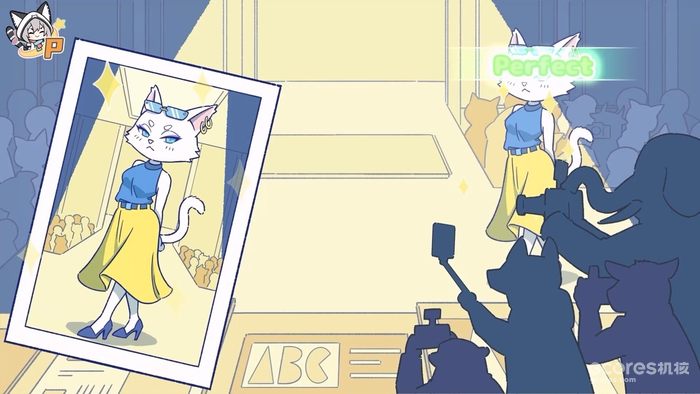
Q5. Mr. Dog in the demo is very impressive. His levels revolve around workplace themes such as “the boss’s cake, his colleagues’ cake, his own fish, and the leader’s pot”. These contents are close to the working life of contemporary young people. Do you deliberately seek resonance from reality? Are any characters or levels drawn from real-life experiences of team members?
A. I will definitely find resonance with real life, almost real life itself (laughs). This is not to say that the specific events in a certain level come from real experiences, but that the characters shown in the events are real.
When we have meetings, we often discuss: How would this character react if something like this happened to him? Sometimes, the feedback given by an introvert is difficult for extroverts to understand; older team members may not be able to understand the attitude of young people towards something. In this case, we will be more inclined to adopt the feedback of those members whose personalities are closer to the game characters, and then create based on this.
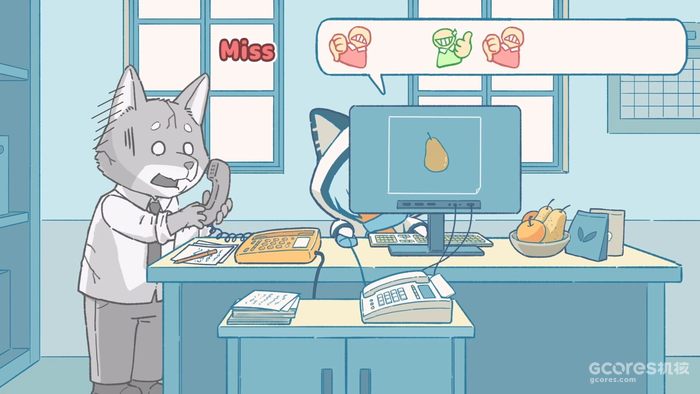
Q6. In addition to being cute, each animal seems to have a relatively clear identity and professional characteristics. What factors do you consider when deciding “which animal corresponds to which occupation”? Do you think of interesting careers first and then look for the right animal?
A. It is necessary to first determine the identity and professional characteristics, and then find an animal that suits it. We will match the animal according to the social characteristics of the character, and then adjust the character setting appropriately based on the characteristics of the animal itself.
Our executive producer Chun Ge loves cats very much and understands them very well. After confirming that Bai Lemei was a cat, he specially made a PPT to introduce the personality characteristics and behavior patterns of different breeds of cats to the team, helping us finally determine the cat’s breed and image characteristics.
There are currently five characters in the game, but during the planning process, we have actually designed more than ten characters, some of which already have original paintings and even level prototypes. It seems they can only be put into DLC (laughs).
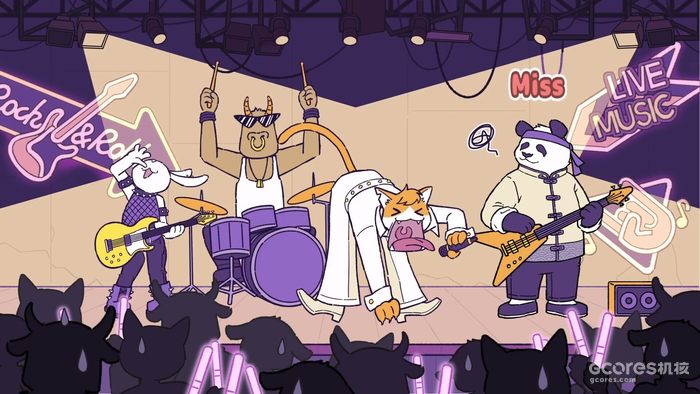
Q7. Demo has added difficulty mode. Judging from player feedback, some seemingly simple levels are not easy when pursuing high accuracy. How do you design the difficulty curve to not only take care of players who are new to audio games, but also leave room for challenges for experienced players?
A. Even on normal difficulty, novices must not be able to get AP on their first play, otherwise the game itself will be no fun.
The difficulty in the early stage is mainly to master the rhythm pattern. In the later stage, the difficulty gradually turns to the complexity of the rhythm pattern itself and the number of rhythm patterns that need to be used in combination. We hope that players will first slowly understand and master different rhythm patterns through an easy-to-use mechanism, and finally be able to skillfully use multiple rhythm patterns in the same song. Just like clapping in a KTV. In the end, not only can you keep up with the rhythm, but you can also shoot it in a complex, refined and beautiful way.
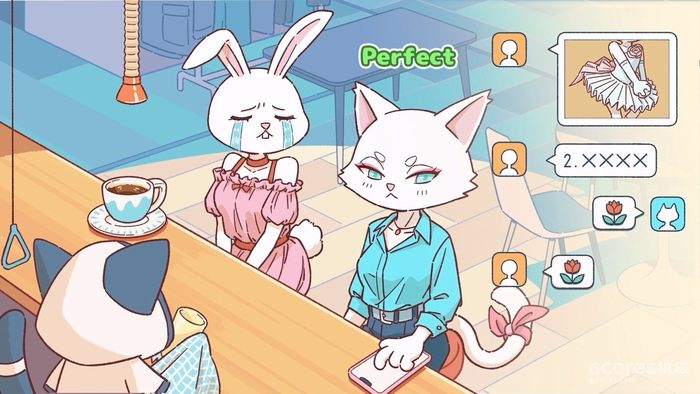
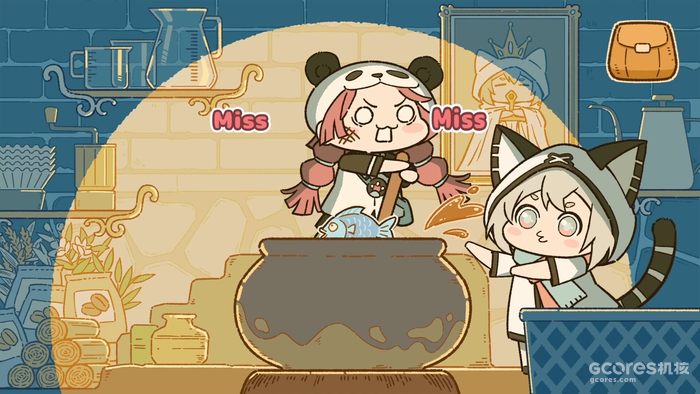
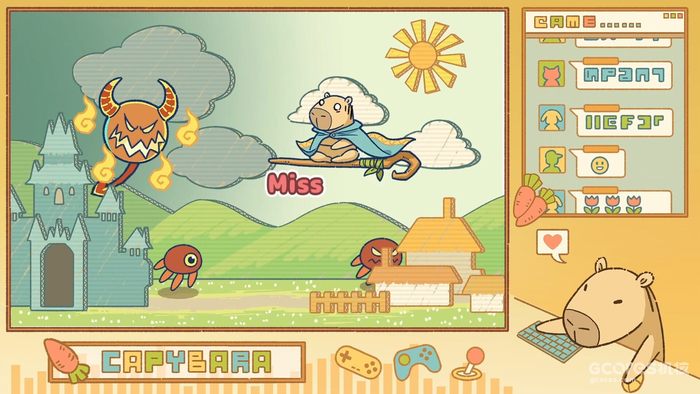
Q8. Even if the player fails to hit the rhythm accurately in the game, the character will have a funny reaction of being in a hurry, instead of simply using “Miss” to inform the failure. Why is there a special emphasis on error feedback? What kind of experience do you want players to get from failure?
A. We believe that feedback on mistakes should be a part of rhythm gaming itself. We don’t want players to just be upset because they didn’t click correctly. Mistakes are part of the game and should be fun, after all, games are meant to be played for fun.
In addition, error feedback is also closely related to the game plot itself. The space left for narrative in audio games is relatively limited, so we hope to make the narrative as detailed as possible.
Q9. “Zootopia Cafe” has gone through many adjustments since it was first released as a demo in 2025 and later participated in the Steam New Product Festival. The official also mentioned that the novice tutorial and UI have been remade, and new levels, plots, decorations and collection systems have been added. What do you think is the biggest change compared to the original version?
A. The changes are almost entirely focused on the experience. At previous exhibitions, we would first teach players how to play, so the feedback we received was relatively positive. The demo itself is more like a level display, and it can still get good feedback from experienced players of rhythm music games; but novice players are often confused because there is no “someone teaching you” process. For us, the novice tutorial is very important, and we also spent a lot of time polishing it repeatedly.
The UI adjustments are also designed to make it easier for players to focus on the game itself. We have also received some test feedback: after completing the game, players will have feelings for this cozy coffee shop and the animals in the game, but the game lacks an outlet to continue this emotion.
I personally like “Amaho no Saki Inahime”. Every character in it makes me feel so warm that after completing the game, I will still go back and plant some rice – although the harvest has no practical purpose, I still want to see these lovely and warm friends again. Inspired by this, we hope to increase the willingness to play repeatedly through the decoration and collection system, and also give players an outlet to put their emotions. In addition, the music, sound effects and scripts have been revised many times, all with the aim of making the overall experience smoother.
Q10. During the Steam New Product Festival, you received a lot of feedback from players. Are there any designs that the team originally thought were fine, but found after actual play that they needed to be adjusted? Which type of feedback has the greatest impact on subsequent development?
A. Player feedback mostly focuses on technical issues such as delays and bugs, which are all very valuable.
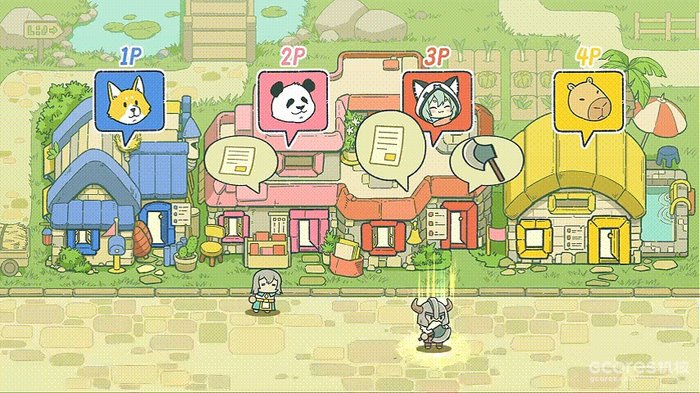
Another interesting piece of feedback is about which hand to use. We have been using WASD by default before, and through logical analysis we believe this is a more reasonable button layout. However, some players pointed out that when playing audio games with the right hand, the control of the rhythm will be more stable. So now the operating layout of the keyboard and controller are trying to be compatible with different habits.
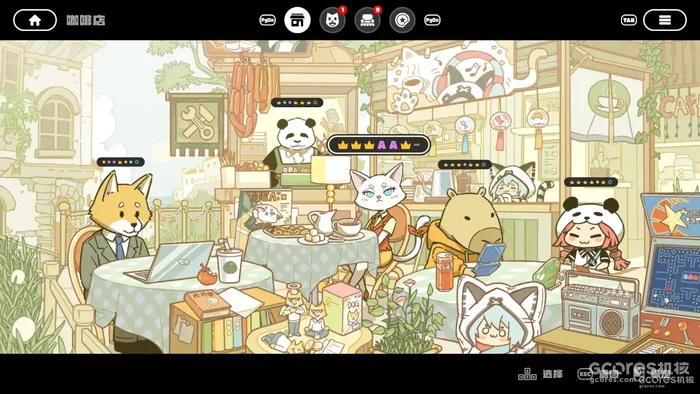
Q11. The game has added a coffee shop decoration and collection system, and the game itself is called “Zootopia Cafe”. Will the official version make “operating a coffee shop” an independent and important system? Or is the coffee shop more of a framework connecting the characters and the plot?
A. “Zootopia Cafe” is a relatively pure rhythm music game with no business elements in it! The coffee shop is a second home for these cute animals, and everyone gathers together like a family. I just want to give players a function to decorate their “home”. It is not a business system, but the emotional outlet mentioned earlier.
However, when we first conceived the entire Zootopia, we did plan ahead for the possibility of IP-based attempts in the future. Members of the Jar of Salt team have experience in business simulation projects. I also like business simulation games, and I even wrote a business simulation planning outline based on a Zootopia coffee shop. Of course, it’s not just business simulation, we have other ideas (laughs). I personally look forward to continuing to expand this world in the future; the premise is that enough players like and support it, and want to play more content.
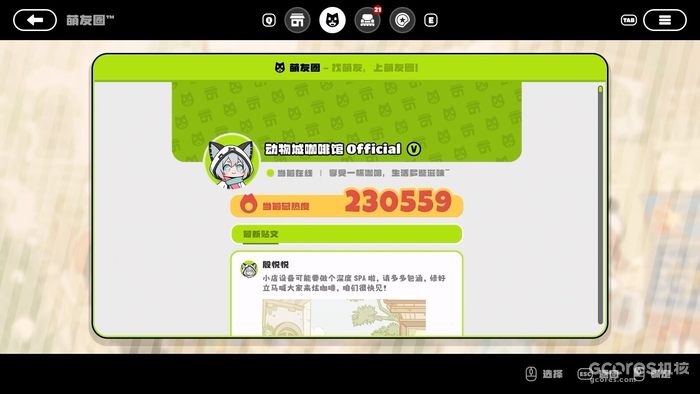
Q12. Part of the plot has been released in this demo. Rather than simply introducing characters through levels, you also seem to want players to gradually understand the relationships between animals, as well as the story of “Zootopia” itself. In the official version, will the plot become an important clue connecting these independent mini-games?
A. Yes. Don’t emotions in daily life also accumulate slowly? Just like my grandma at the canteen downstairs, we have a very good relationship.
The plot is the clue that connects these mini-games. We hope that players who like the plot will smile knowingly when they read each text and comic carefully; if they don’t like it, they can skip it at any time without affecting the gameplay.
Q13. The Steam page currently also lists the “Level Editor”. For a game that emphasizes music and rhythm, it is not easy to allow players to create their own levels. Why did you decide to add this feature?
A. The level editor is expected to be updated within two months of the game’s launch. Since we still need to add other functions to the game and our manpower is tight, the development of the editor can only be postponed a little.
We have observed that many music game enthusiasts have the desire to express their own ideas and create levels. On the other hand, in order to take care of novices, we cannot make the official levels particularly difficult, but hardcore players do have needs in this regard. Coupled with the limited manpower of the team, subsequent DLC updates cannot be as fast as mobile games. Therefore, the editor can allow players who like “Zootopia Cafe” to always have new content to play.
Another point is that I personally am a relatively hardcore player, and I really look forward to seeing powerful players create super difficult levels!
Q14. For players who have experienced the Demo, in addition to the increased content volume of the official version, what other contents can represent the final version? If you could only choose one part that you most want players to experience for themselves, what would you choose?
A. Demo is ultimately a display of frameworks and levels, and the content is completely fragmented. Players may like some of the small points, but these small points are not enough to carry a complete journey that is warm, interesting, full of fireworks, and maybe even a little touching.
The core of “Zootopia Cafe” is not to piece together countless fragmented levels. The official version itself will be a complete experience, and all the functions in it will be connected in series and presented to players as a complete work.
We hope that players will have a relaxing, happy, happy and interesting experience in the game, and we also hope that everyone can smile at certain moments.