Author: Bai Yazhou
For a long time, “making a game of your own” has been a desirable but distant thought for most players. It often means that you need to cross a series of realistic thresholds such as programming, art, planning and even team running. There are many people with ideas, but there are only a few people who can actually turn them into reality.
But if you open TapTap recently and click on the ongoing 2026 “Spotlight GameJam” event page, you will probably intuitively feel a change. The high wall between “players” and “creators” is getting lower and lower.

Not long ago, the new TapTap “Spotlight GameJam” ended its 21-day online development phase and officially entered the national trial and review period. A series of data caught my attention. Looking back at the previous five independent camps launched by Xindong and TapTap, more than 3,000 developers were gathered in the past few years and nearly 500 works were produced. In this year’s Spotlight Challenge, tens of thousands of people participated in the one-month registration period, and in the following 21 days, more than 2,000 game demos were produced that can be played directly.
From the cumulative number of nearly 500 models in previous sessions, to the output of more than 2,000 models in a single session. This set of data reflects a clear trend: with the iteration of development tools, the popularization of AI-assisted technology, and the maturity of the game development atmosphere in colleges and universities, “making games” is losing its former mystery and gradually becoming a daily expression like writing articles and editing videos.
However, when the development threshold has been significantly lowered and the number of works has experienced explosive growth, a new problem has also emerged:When more and more people are able to make their first game, how can we prevent these efforts from being drowned in the huge flow of information and becoming a self-pleasure that no one cares about?
In fact, the more popular participation there is and the more grassroots creation flourishes, the more it needs a professional enough platform to provide guidance and support. And this is exactly the proposition that this year’s TapTap Spotlight is trying to answer around the development theme “Emergence”.
01 “Emerging” games
For players who are familiar with GameJam, the reveal of the “development theme” has always been the most suspenseful part. This year, the proposition given by TapTap Spotlight is only two short words:“emergence”。
In the design theory of video games, “Emergence” is a very professional term. The so-called “emergent design” often means that developers do not forcibly preset each fixed performance, but instead build a set of concise and self-consistent underlying physics or interaction rules; when the basic rules collide with each other and run under the free operation of the players, many unexpected tactical combinations and dramatic moments will naturally arise within the system.
Such a vocabulary that can be very hard-core but also leaves enough room for divergence was handed into the hands of tens of thousands of contestants and quickly spawned a variety of problem-solving ideas within 21 days.
When browsing the more than 2,000 demos launched this time, you can quickly see the different aspects of the creators’ understanding of the word “emergence”. Some people choose to solve the problem from intuitive visual and physical mechanisms, while others lead “emergence” to abstract philosophical thinking and narrative experiments. Whether it is the category of imagination or the category of expression, it is rich.
In addition to the variety of themes and gameplay, there are two very eye-catching classification tags in this year’s library:“Student Team” and “TapTap Manufacturing”。

The significant increase in the number of applicants for Spotlight this year is largely due to the active participation of students from major universities. On campus, young students often have a strong desire for expression and imagination without too much commercial baggage. All they need is an opportunity to transform what they have learned in class or dormitory night talks into complete works. The 21-day competition format just provides these college teams with an opportunity for practical training.
The emergence of the “TapTap Made” label shows that AI-assisted tools further lower the threshold for creation. With the help of the low-threshold creation tools provided by the platform, many enthusiasts who lack traditional programming background can quickly turn their ideas into interactive finished products.
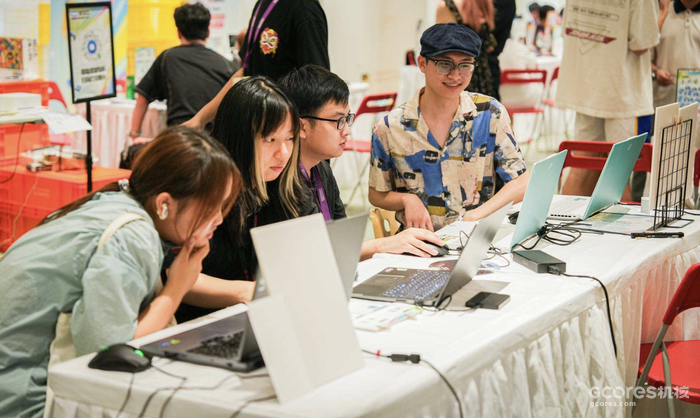
From this perspective, “emergence” occurs not only within the rules within the game, but also outside the playing field. When student teams from colleges and universities, amateurs who tried across fields, expressors who entered the game with the help of new tools, and experienced independent game developers gathered in this 21-day creative container, more than 2,000 works of different styles, even with a little greenness and roughness, were unveiled, which in itself was a vivid “emergence” of folk game creativity.
02 Professional support mechanism
When “making games” becomes more and more routine, and more than 2,000 works can be produced in one event, the next question becomes particularly critical: How to make these works truly seen?
The traditional 48-hour GameJam is often more like a short-term gathering within developers. Everyone stayed up late on weekends and uploaded project files. After the event, most of the demos stayed quietly on the server. Except for the creators themselves and their teammates, they rarely had the opportunity to come into contact with a wider range of ordinary players.
For newcomers who devote themselves to creation with enthusiasm, the easiest thing to kill their morale is often not the bugs in the development process, but the sense of disparity after the work is completed.
This is where TapTap’s “Spotlight GameJam” stands out in terms of competition system design. It not only used the 21-day cycle to give enough time to polish the work, but also relied on TapTap’s own community ecology to set up a “trial review period” that lasted for one and a half months (October 25th to December 11th) after the development period.
A closer look at the trial rules of this year’s Spotlight shows that the platform has made a lot of detailed considerations on “how to use professional mechanisms to guide public participation”:
First, a random distribution mechanism is used to ensure relative fairness in exposure. Faced with more than 2,000 works of varying sizes, if you simply sort by popularity or clicks, the top works will easily absorb most of the attention, causing a large number of newcomers’ works to lose exposure opportunities. To this end, Limelight adopts the rule of “display order in no particular order, updated randomly every hour” in the trial experience area, and provides an eye-catching “random trial” entrance. Whether they are experienced and mature teams, or students and individual developers who are trying it for the first time, they all have the same opportunity to be seen by players at first glance in front of the mechanism that is refreshed every hour.
The second is to use the “trial play duration threshold” to accumulate real player feedback. In many competitions with a public voting nature, the popularity award sometimes turns into a vote-seeking session that simply competes for reposting. But in the spotlight rules, the page clearly marked a restriction:The boost coupons players receive every day must be “the boost will take effect after the trial has been played for 10 minutes”, and the system will regularly check the duration of the trial. At the same time, the main way for players to obtain more boosting coupons is to actually try out more games, or to write real and useful reviews for the entries; the official has also set up supporting activities such as “Emergence Observation Room” and “Trial Pioneers” and “Offsite Judges” and other incentives.
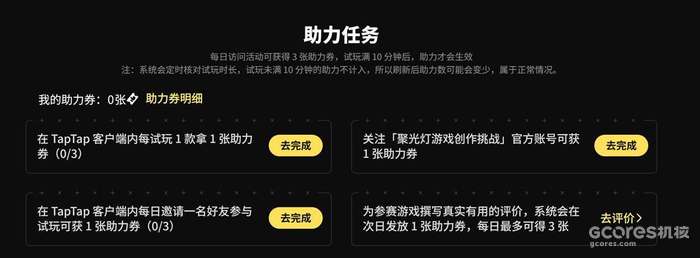
The purpose of this set of rules is very clear: to minimize the amount of invalid ticket brushing that is just a quick glance, and to encourage players to truly calm down and experience the game. For fledgling creators, even if they fail to win an award in the end, as long as hundreds of real players patiently play in their demo for 10 minutes and leave specific experiences and modification suggestions in the comment area, this kind of real feedback from the front line is often more valuable than simple votes.
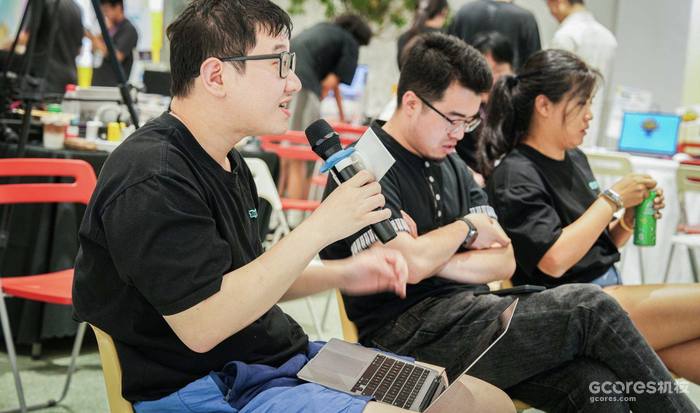
Third, it is a multi-dimensional review perspective that connects academia, industry and the community. Looking at this year’s list of judges, we can also see the industry support that the platform has configured for this creative activity. The list includes not only Xindong CEO Dash, publishing VP Brandy and other platform and publisher representatives; there are also first-line independent game producers, such as “Diver Dave” producer Jaeho Hwang, “Ghost Valley Eight Wastelands” Zhang San, “Full Moon Night” Little Carpenter, “Mountain and River Explorer” Chen Zhen, “Dark Cuisine King” Gu Hanshen, “Little Life” Jiaohu, “Cat God Ranch” Tudou, “Sword Hidden Hero Traces” Sanhuang, and “Sultan’s Game” main copywriter Dian Ga, etc.; also covers indienova, 2P Games, Kaoru Core, Coconut Island Games, Pujia, Gamirror Games, Dongpin Games and other industry publishing and investment institutions, as well as scholars and professors from Shanghai Jiao Tong University, Tongji, Zhongchuan, Zhejiang University, Donghua University and other universities, plus the “Gamer Jury” on the TapTap site.
On one side are a large number of private and university creators with different ideas, and on the other side is a review system that takes into account academic perspectives, production experience, distribution resources and the reputation of core players. The intervention of this professional framework gives daily game creation a reliable frame of reference.
03 From the starting point of 21 days to a bigger stage
For many contestants, putting their work into the spotlight is not the end of their creation, but more like a proven new starting point.
If we look a little longer, we can already see that the works that have stepped out of the spotlight are moving towards a broader market step by step. For example, the independent game “Jeweler of the Abyss”, which made a splash at the recent Steam New Product Festival and received a lot of attention and praise from players, was originally a work hatched from the first TapTap Spotlight GameJam.
Looking back at the gameplay of “The Jeweler of the Abyss”, it has chosen a rather clever entry point: it combines the excitement of “stone gambling and jewelry processing” in reality with the Cthulhu-style underground mysterious narrative. In the process of running the workshop, selecting rough stones, and peeling and cutting them, players are not only carving jewelry, but also gradually coming into contact with the strange phenomena and worldview secrets hidden inside the rough stones.
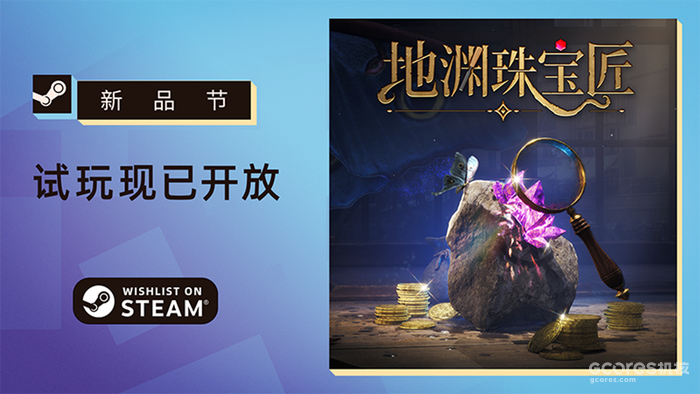
This attempt to fuse two seemingly wide-ranging themes together has a distinct GameJam color – during the 21-day creative challenge, developers can put aside conventional business routines to verify a core idea that is novel enough. And when this early prototype received positive feedback from the first batch of players on the spotlight stage and verified the feasibility of the gameplay, the team had the confidence to continue to expand it into a complete commercial work, and gradually became known to more players during subsequent development and testing.
The growth trajectory of “Jewels of the Earth” just illustrates the practical significance of events such as Spotlight for the independent game ecosystem: it first uses a low-threshold, high-inclusive atmosphere to encourage creators to turn the ideas in their minds into even a slightly rough demo; then, through real player community trials and industry reviews, it helps those ideas with real potential to complete early screening and polishing, and promotes them to follow-up long-term development.
Now, a new round of more than 2,000 demos are on the table.
Behind these works, it may be the first attempt of several college students working together in the dormitory, it may be the personal expression of an industry practitioner who breaks out of the daily framework after get off work, or it may be the first work completed by ordinary players with the help of new tools. Not every one of them may become a commercial hit in the future, but every carefully crafted work carries the creator’s understanding of the word “fun” and is also waiting to meet players who understand it.
From now until December 11, the trial channel of 2026 TapTap “Spotlight GameJam” is open to all players. If you want to see what young creators are thinking about in your spare time, you might as well open TapTap, click on an unfamiliar demo in the list that is randomly refreshed every hour, try it for 10 minutes, leave a real review, or vote for a support coupon.
After all, it is this careful click and feedback that forms the soil for good ideas to continue to “emerge”.