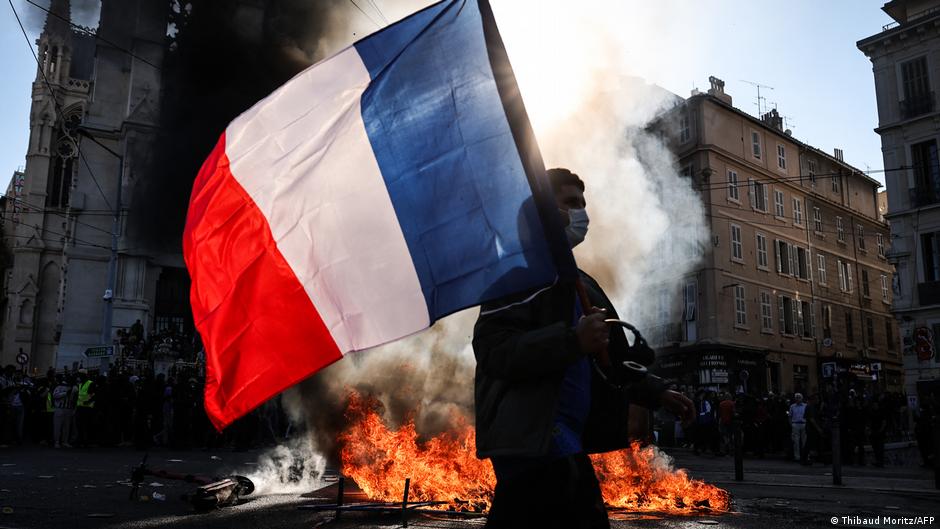
Nike Greater China filed a quarterly report that silenced Wall Street:In the first quarter of 2027, revenue was $1.18 billion,It plunged 22% year-on-year, and the drop was as high as 26% after excluding the impact of exchange rates.
Greater China has experienced its ninth consecutive quarter of negative growth. There are market rumors that Nike is preparing to abolish the Greater China region and merge it with the Asia-Pacific region.
The company’s stock price has fallen from a high of more than $170 in 2021 to $34 today, a shrinkage of 80% in five years. A company that once told young people around the world what to wear is losing the Chinese market in free fall.
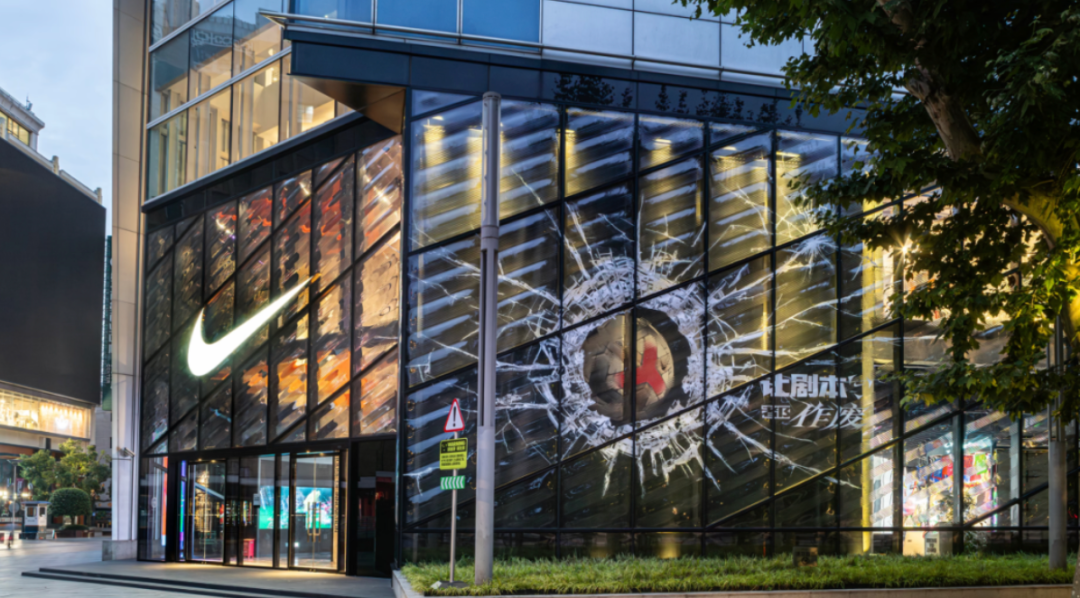
Nike’s problem is not just the decline in market value and revenue, but the fact that those born in 2000 and 2005 feel that it is “no longer cool.”
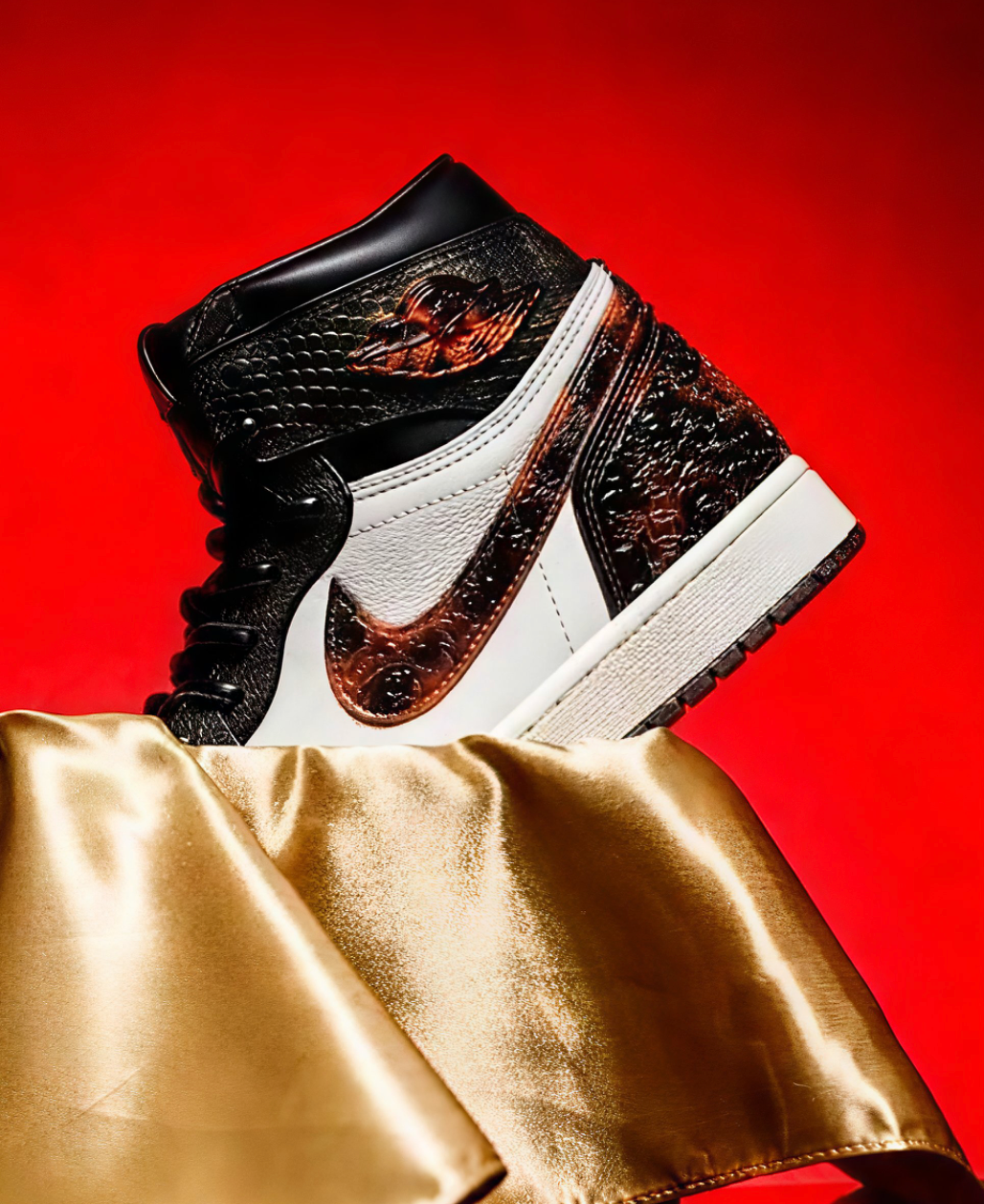
AJ Jordan, who was regarded as a treasure by countless people born in the 80s and 90s, is considered an old-fashioned aesthetic in the eyes of the people born in the 2000s.
Many people have read Phil Knight’s autobiography “Shoe Dog”. He wrote “Cowards never set off, the weak die on the road, and we are the only ones left to move forward.” Half a century ago, the young man who traveled across the United States carrying a box of Onitsuka Tiger shoes turned a niche running shoe brand into a global sports empire through his lonesome courage.
At that time, Nike was a symbol of rebellion, breakthrough, and a spiritual symbol of ordinary people changing their lives through hard work.
Today, this spiritual symbol is fading in the eyes of the younger generation.
1. The peak of sneaker culture has passed
It is said that Nike cannot avoid sneaker culture. This may be the most successful marketing case in the 21st century, bar none.
The craze for shoe speculation in 2018 and 2019 is now difficult for any product to replicate.
AJ1, Dunk Panda, TS Barb, queues for lottery, resale at increased prices, queues in front of sneaker stores in the early morning, a pair of shoes are sold ten times or twenty times from the original price.
Wearing a pair of limited edition AJ1s to go out at that time was similar to driving a Porsche 911 to a bar today. It was a social currency.
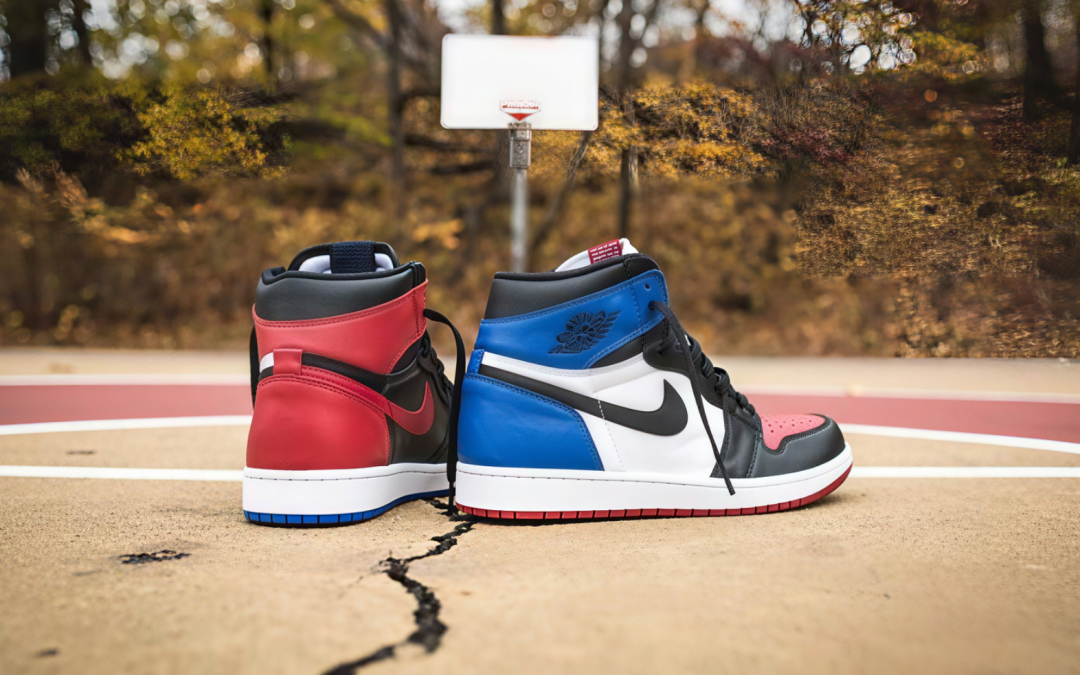
Sneaker culture has turned Nike from a sports brand into a subculture pope, making that “hook” a totem of identity for young people around the world.
The problem is, that time has passed.
The shoe speculation bubble began to burst in 2020. After the epidemic, global consumption cooled down, and Dunk and AJ1 were frantically replenished, making limited editions no longer scarce and turning from “unavailable” to “buy at will”.
Moreover, those born in the 1990s who saved three months of their salary to buy a pair of AJ1s are now over 30 years old. They have begun to worry about mortgages and struggle to make a living. They are trapped in the dilemma of food, rice, oil and salt, and their enthusiasm for sneakers has slowly given way to reality.
As for the newly grown post-00s and post-05s, their memories of sneakers do not include queuing up in the early morning. The first time they came into contact with Nike was the 50% off sneakers at the outlet. Their enthusiasm and belief in Nike and AJ did not go beyond the product itself.
When scarcity disappears, the value of social currency depreciates rapidly.
In the past, a pair of limited edition shoes could stir up the conversation in the entire circle – but now, they are so full on the shelves that there is no desire to discuss them.
The ebb of sneaker culture is not the failure of Nike, but the end of an era.
Those youths who stayed up late queuing in front of sneaker stores, and those obsessions to save money and save money for a pair of shoes, have become nostalgic topics of conversation as the post-90s generation grew up.
2. It’s not just Nike that’s stalling
In fact, the entire traditional sports brand track is experiencing a collective stall.
PUMA’s growth rate dropped to 6.6% in 2023 and only 4.4% in 2024. In 2025, the overall decline was 8% after excluding the impact of exchange rates. Q4 plummeted 21% in a single quarter. The German headquarters simply gave up treatment and gave up its largest shareholder to Anta.
Reebok, once the uncrowned king, was sold back and forth by Adidas and has long since withdrawn from the mainstream narrative.
These once-powerful international sports brands seem to have suddenly lost their appeal to young people.
These families have one thing in common:Their cultural assets are all saved by the young people of the previous generation.
For example, Nike’s cultural capital is Jordan’s Bulls dynasty in the 1990s, street basketball and Air Force 1 in the 2000s, and Dunk draws and Supreme co-branding in the 2010s.
After this, there seemed to be no new stories.
The stories are wonderful, but both the storytellers and the listeners are old.
Each generation of young people needs its own cultural symbols. No matter how brilliant the classics of the previous generation are, they have become “old antiques” in the eyes of the next generation.
You could just open the door of a university dormitory and ask an 18-year-old boy what the most expensive pair of shoes in his shoe cabinet is: it might be Cloudmonster, it might be HOKASpeedgoat, it might be a pair of NewBalance 990, it might be Brooks’ HYPERION ELITE, or it might even be Li Ning’s Feidian, but most likely it won’t be AJ.
In the perception of this 19-year-old male college student, the brand with the hook is very famous, but it is worn by his father and brother, not by himself.
3. The core competitiveness of emerging brands: new stories and identities
Completely different from the stalling of traditional sports brands, emerging brands are growing at a rapid pace:
On will sell 1.79 billion Swiss francs in 2023, 2.32 billion in 2024, and 3.01 billion in 2025. It has almost doubled in three years, with a gross profit margin of 65%. The whole industry is discounting, and it becomes more and more expensive.
HOKA is even more exaggerated. According to the financial report of the parent company Deckers, this brand sold a single brand of 2.23 billion US dollars in 2025, a year-on-year increase of 24%, and already accounted for 45% of the parent company’s total revenue.
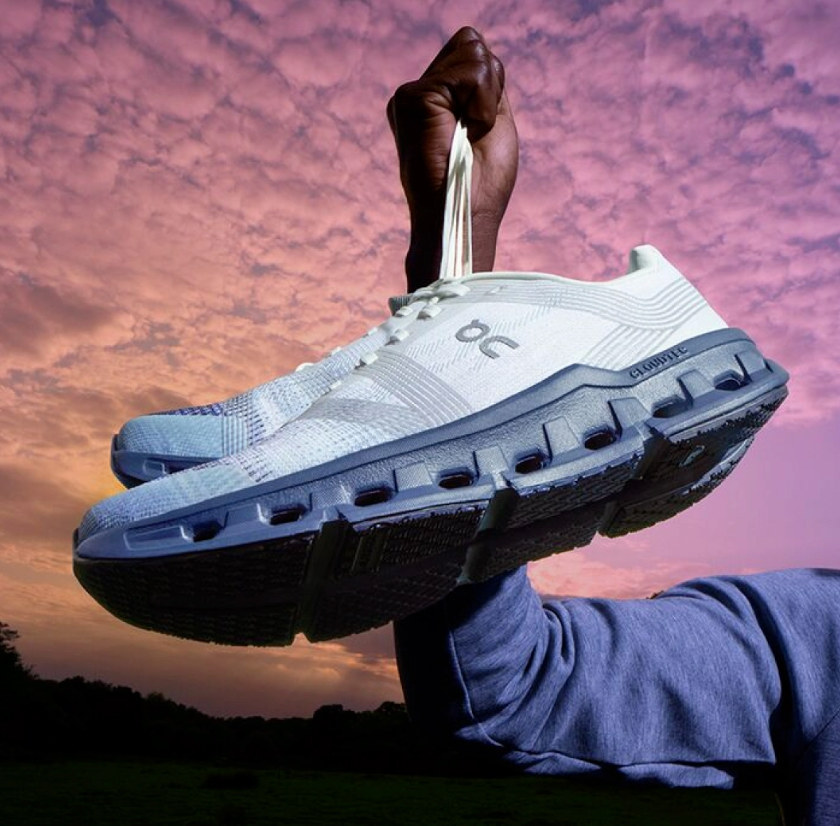
You must know that in 2013, when Deckers acquired it, HOKA was just a niche brand serving UTMB cross-country races, with annual sales of only tens of millions of dollars.
What did they do right? The answer is to provide a new “identity” for a new generation of consumers.
Nike’s basic base is the hard-core people who are serious about running and playing ball.
But today’s young people, whether they are running or playing ball, mostly do it for dressing, or to take a beautiful photo on the weekend and post it on Xiaohongshu.
The instantly recognizable and exaggerated CloudTec midsole of Angpao is actually an exclusive status symbol – it says“This person has taste, is not introverted, and lives a relaxed middle-class life.”
The same goes for HOKA’s iconic thick sole:Most of the people who wear HOKA do not run cross-country races, but wear it when shopping in Taikoo Li – but it represents such an identity – “I don’t run cross-country, but I want others to think that I like cross-country.”"。
No matter what kind of shoes they are, functional attributes are weakening and identity attributes are becoming the core.
Also, for example Angpa. It rarely participates in major sales, and DTC direct sales account for more than 70%. It would rather take its time than distribute goods randomly (of course, this is also supported by Angpa’s extremely high gross profit).
On the other hand, Nike has been offering 50% discounts at outlets in recent years. Low prices of 299 and 399 are frequently released on e-commerce platforms. Consumers have long formed a conditioned reflex: to buy Nike, you don’t need to pay the full price. Just wait for the discount and go to the outlet to buy it.
When a brand relies on the value of belief to generate a premium, and the premium is repeatedly broken down by various promotions, its social currency attribute begins to depreciate rapidly.
In terms of visual language – the difference between Nike and these cutting-edge brands is also growing – the street basketball cultural style represented by Nike AJ has been out of touch with the current mainstream aesthetics of the post-00s and post-05s generations.
What young people are now pursuing is the Swiss industrial style like Angpa, the exaggerated thick soles like HOKA, and the dusty cream texture like New Balance.
When young people buy shoes, the core purpose is to wear them, to externalize their self-aesthetics, and to buy an identity label that says they are “different from my dad.”
For most people, they don’t need a pair of shoes that can play professional basketball games, nor do they need a pair of shoes that can run mountain cross-country races.What you need is a pair of shoes that can express your attitude towards life.
Those traditional sports brands have been talking about “competition, hard work, faster, higher, stronger” for decades. To today’s young people, it sounds more like an outdated preaching.
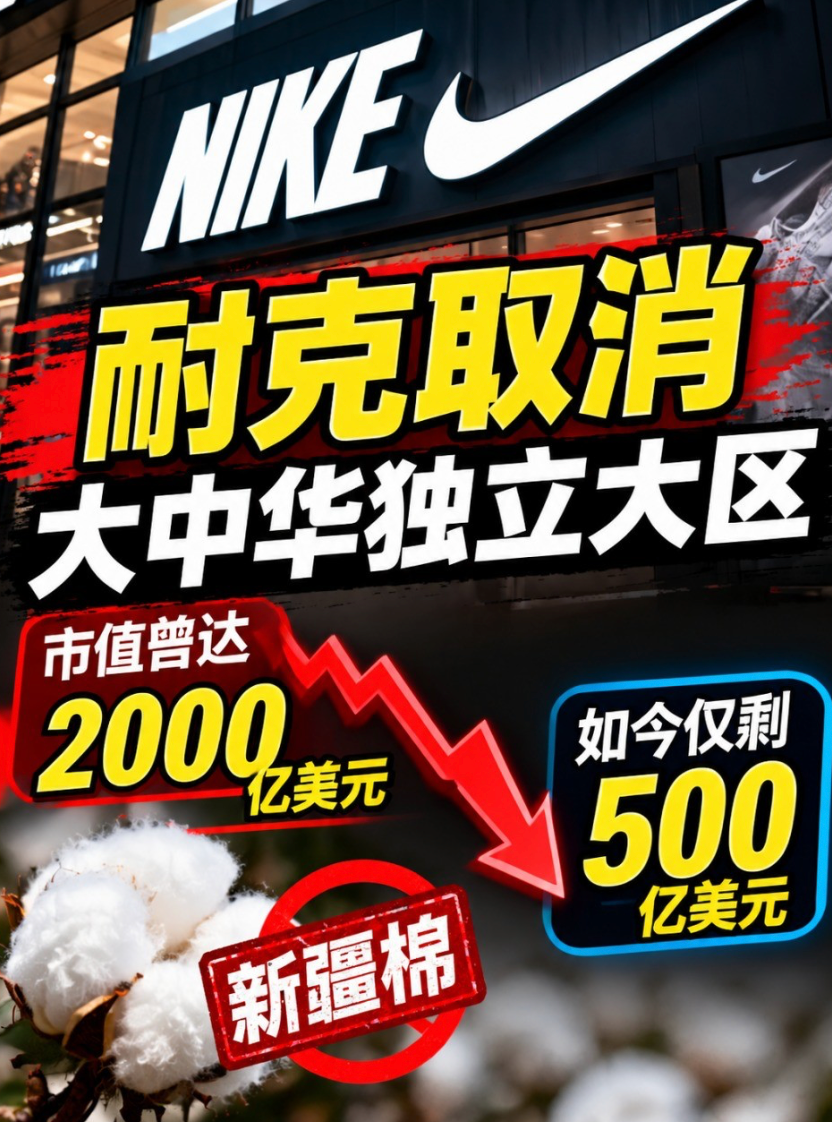
4. The Xinjiang cotton incident was the trigger for Nike’s overall collapse in China
If the ebb of sneaker culture is a chronic disease that causes Nike to slowly lose blood, then the Xinjiang cotton incident in 2021 is an acute myocardial infarction that crushed the market.
At the end of 2020, Nike mentioned its “concerns” about Xinjiang cotton in a statement. In March 2021, the incident spread across the Internet, and domestic artists lined up to terminate the cooperation. Wang Yibo, Yi Yang Qianxi, Deng Lun, and Yang Mi officially announced the termination of their contracts one after another.
The official media used harsh words. Although there was no direct ban at the administrative level, the procurement demand for Nike from central state-owned enterprises, public institutions, and civil servants almost plummeted. People within the system began to wisely put AJs into shoe cabinets and replace them with domestic brands such as Anta and Li Ning.
The lethality of this knife has been underestimated by many people.
Nike’s core profits in China are middle-class families and people in the system in first- and second-tier cities – these people have strong spending power, rational decision-making, and high brand loyalty. They are also the main consumer group for AJ and Nike’s high-end running shoes.
After the Xinjiang cotton incident, these people not only stopped buying Nike at all, but started to hesitate when paying for it.
and“Brand trust” is a thing. If you hesitate once, the crack will widen, and you will never be able to go back to the past.
Immediately afterwards, product problems also emerged – in order to spread supply chain risks, Nike moved a large amount of production capacity from China to Vietnam and Indonesia.
As a result, the quality control of products has visibly declined – glue opening, glue overflow, and shoe shape distortion have become the norm. Veteran players complain that “the quality of Nikes in Putian is now 10 times better than genuine Nikes.”
On a technical level, Nike has not had a revolutionary midsole breakthrough in the ten years since ZoomX – public relations turmoil, declining quality control, and technical stagnation – three things collided and consumed all the goodwill Nike had accumulated in China for decades at once.
5. How did Adidas, which was once in trouble, turn around?
In fact, after the Xinjiang cotton crisis in 2021, Adidas’ revenue was also greatly impacted. Superimposed on the epidemic lockdown, in the first quarter of 2022, Adidas’ revenue in Greater China plummeted 35%.
Former CEO Luo Side bowed his head and admitted his mistake in an interview in August 2022. His original words were “We didn’t understand Chinese consumers well enough, leaving room for Chinese competitors who did better” – he was referring to failing to grasp the national trend and watching Li Ning and Anta take away share. Ten days after saying this, he announced his resignation.
Misfortunes never come singly. In October 2022, Kanye West, the star spokesperson for the Adidas Yeezy (Coconut) series, continued to make anti-Semitic and Nazi-like remarks, which led to Adidas being boycotted in Europe and the United States. As a result, Adidas’s Yeezy inventory of more than one billion euros turned into scrap overnight, with losses exceeding 2.5 billion euros and its stock price cut in half.
The new CEO Goulden took over in 2023. He did three things after taking office:Dramatically clean up Yeezy’s inventory to stop the bleeding, delegate power to local teams in Greater China and South Korea, and launch the clover archive retro strategy.
The first two are crisis firefighting,What really brings about long-term growth is the third item – revitalizing the archives of retro old shoes with clover-pressed box bottoms.
This is not about randomly picking a pair of old shoes to reproduce, but focusing on the thin-soled, simple, low-saturation moral training shoes such as Samba, Gazelle, and SL72.
This type of shoe has a natural advantage: it is comfortable, versatile, and not limited to sports scenes. It is suitable for pairing with jeans, pleated skirts, and tights. It is born for daily wear.
What really transformed Samba from a pair of dusty old shoes into a global hit is that it happened to hit a major shift in global youth culture – from the “sweaty sportsmanship” – to the Korean style of relaxed, fashionable, retro and everyday wear aesthetics.
In the past few years, K-pop has taken the world by storm, and the private outfits of BLACKPINK, NewJeans, and BABYMONSTER have become the style template for young people around the world. Samba’s simple and low-key moral training shoes are the universal basic item for Korean style wear.
For example, Jin Jenny, the spokesperson of Adidas and the Korean girl group, not only shoots advertisements for Samba, but also wears Samba in daily life. Adidas seizes the opportunity and continues to launch Samba limited color matching in the Korean and Asian markets, setting a new pace and benchmarking trendy brands.
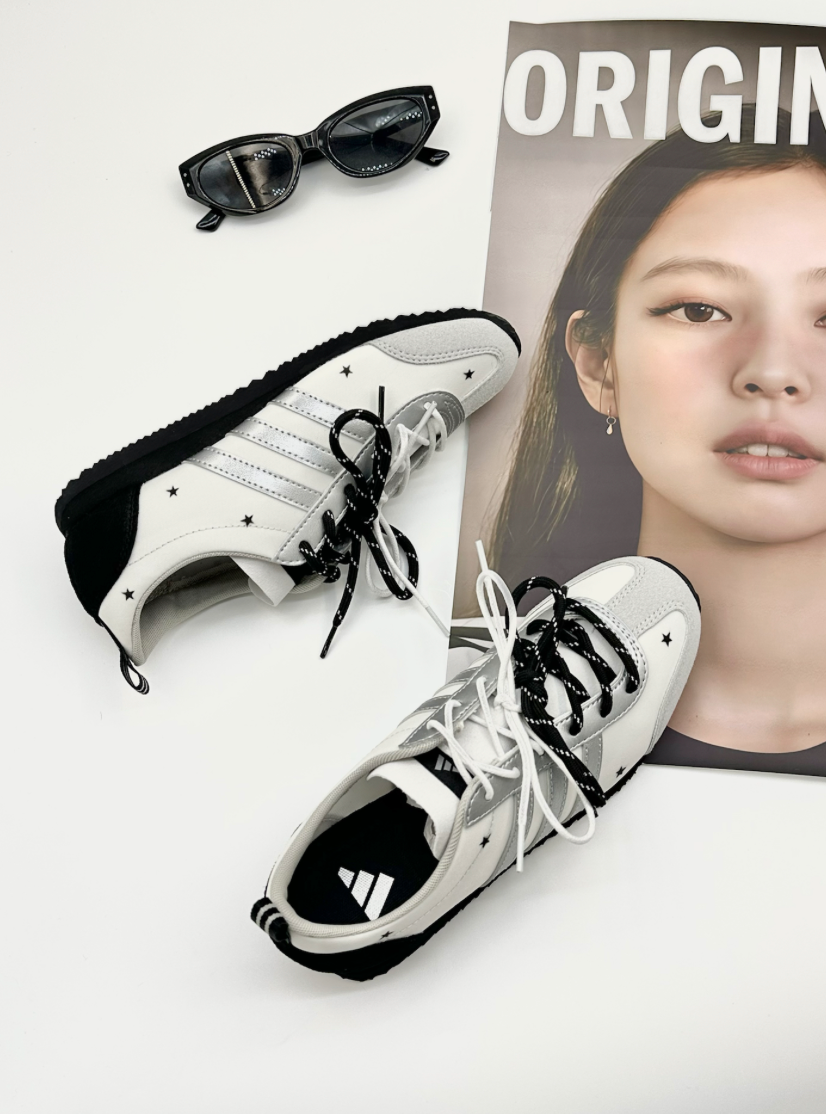
This pair of moral training shoes, originally used for football training, jumped out of the professional sports scene and became a fashionable item in the shoe cabinets of young people around the world.
Adidas’s rebound this time is definitely not based on product performance, but on seizing the changes in youth cultural trends.
It no longer repeatedly emphasizes the “athlete narrative of hard work and competition”, but instead embraces relaxation, retro aesthetics, and daily wear.
In 2024, the sales of the Samba series alone will reach 1.5 billion euros, accounting for 7% of Adidas’ total revenue, and its volume will soon catch up with Yeezy’s peak that year. By 2025, Samba’s popularity will remain strong. Together with Gazelle and Spezial, it will form a growth matrix for retro shoes and continue to drive Originals’ clover business.
The result is: Adidas Greater China continues its growth momentum, with double-digit growth for eleven consecutive quarters. In 2025, the group’s global revenue will reach 4.811 billion euros, an increase of 13%, and the stock price has made a beautiful V-shaped reversal.
6. Nike’s real problem: The spirit of the times it was bound to has faded away
The outside world has cited many reasons for Nike’s decline: the public relations scandal offended China, the relocation of production lines to shrunk quality, and the lack of technological breakthroughs in ten years. These are all reasons, and every one of them is true. But neither is the root cause.
When Jobs talked about Nike at that time, he said: “Nike is not a company that sells shoes at all, it sells culture and values.” Looking at these words today, they are half praise and half judgment.
How did Nike become the dominant player in the sports industry in the past thirty years?
It’s not just about how soft and strong the shoes are, it’s about packaging the things that the United States was most proud of after World War II—personal struggle, fighting spirit, and the American dream—into a “check mark” and exporting it to the world.
Jordan, Kobe, Iverson, LeBron, everyone is "Change your destiny through hard work" A specimen of the American Dream.
The classic Just Do It – why did this sentence become the slogan of the times in 1988? Because at that time young people all over the world still believed"As long as you are willing to fight, you can win"。
The problem is, this spirit is outdated.

And it’s not just China.
Look at the young people around the world,From Silicon Valley to Seoul to Shanghai,"Anti-involution"" lie flat ""Relaxation" Why are these words popular?
Because under the impact of class consolidation and AI, the younger generation has become more interested in"struggle hard"The incident itself created suspicion. Everyone doesn’t want to hear another advertisement that condescendingly tells you that young people want JustDoIt—what everyone wants to hear is "You are good enough, you have to show the beautiful you"。
Angpa sells relaxation, HOKA sells comfort, and Samba sells retro nostalgia, all of which are anti-struggle narratives.
Including Adidas’ comeback, essentially it stood on"Anti-JustDoIt"This side.
Nike didn’t do anything wrong.
Its products are still the same products, its athletes are still the same athletes, and its commercials are still the same tone. It’s not even arrogant – it’s not that it hasn’t tried to repair it after the Xinjiang cotton incident, but every time it moves, it’s like an elder trying to imitate the young people’s speech, which makes me tired.
In short, Nike, the zeitgeist it was bound to, has exited.
Of course, Nike is not ignorant, but because it is too big, too successful, and too accustomed to that script, it cannot turn around flexibly.
7. Ending
I’m not saying Nike is done. Its supply chain, star resources, and R&D capabilities are still among the best in the industry, and its size will not disappear completely.
but,The biggest crisis for a brand is never a decline in sales, but that the aesthetics and spirit it represents are out of touch with the current era.
Baleno is like this, Metersbonwe is like this, Gap is like this, and now it’s Nike’s turn to stand in this position.
Young people won’t call you names on social media. They just quietly delete you from the shopping cart and turn around to buy a pair of Angpa or a pair of Samba.
Of course, the decline of brand narratives is not entirely the same as the logic of the capital market.
Nike’s fundamentals are still there, with plenty of cash on hand, and its star contracts and supply chain are still among the best in the industry.
If it can really perform a major surgery on local decentralization, product narrative, and price system like Adidas did, it may not have a chance of rebirth. For traders on the left, when the consensus is bearish, it may be the right time to enter the market.
Author’s public account: brand voice (ID: brand-voice)
For more exciting content, please visit Shuying.com – Article Channel – Project Channel – Recruitment Channel