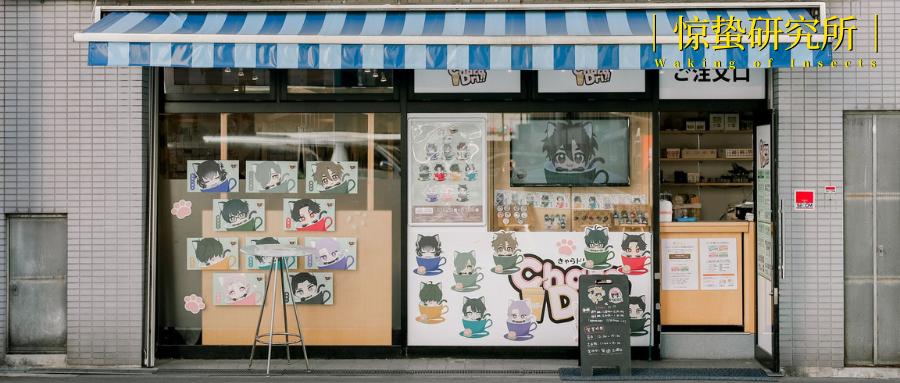
Author: early summer
Open the “Millet Store Lightning Protection Post” on social media. Arrogance, double standards, arbitrary pricing, confusing the real with the real, and emotional employment may be summarized as the “five sins” of managers.
If a customer looks at the shelf for a while longer and touches the blind box a few more times, the clerk may be watching him or even giving him a cold look;
For the same type of millet, the price in stores is much more expensive than official channels and other stores, and even the printing, packaging and copyright logos may not match the official version. As for the outrageous behavior of the manager writing down his personal likes and dislikes about the IP in the in-store notice, it makes people think that he has accidentally walked into the manager’s living room.
And thisThese behaviors that are completely unlike “doing business” have also made “two-dimensional managers” another controversial group after “coffee managers”.
“My” rules are rules
As an old customer who has spent tens of thousands of yuan in total, Suan Tai never dreamed that she would be kicked out of the community by the owner of the millet shop without warning.
“I started buying grains in this store when I was in high school, and later joined the store’s group chat. This group usually releases new products, and also allows members to freely sell and exchange items.” Ganotai told Jingzhe Research Institute that she usually not only buys new products in the group, but also exchanges and sells the millets in her hands with other players. Over time, this group has become a channel she often uses when buying and exchanging grains.
It wasn’t until she was selling celebrity photo cards in a group that she discovered that she was not the “god” of the store at all. That night, as soon as she posted the product information, the administrator reminded her that the sale of celebrity photo cards was prohibited in the group. Garantai recalled: “This rule was not clearly written in either the group announcement or the group notification that could be seen at the time. After receiving the reminder, I responded in time, but because the message had exceeded the withdrawal time, I had no choice but to give up. When I opened the group chat again the next day, I discovered that I had been removed from the group.”

Photo courtesy of garlic moss
Being kicked out of the group did not cause actual losses to Garlic Moss, but the store’s handling of the matter was unacceptable to Garlic Moss. “I often pay attention to new products in the group, and I will buy the ones I like as soon as possible. There are also times when I buy them one by one, and I consider myself a stable consumer in the store.” In her opinion, the store should at least give her a chance to communicate normally. But after she took the initiative to negotiate, she only got one sentence: “I’ve said it before.”
After Garlic shared this experience on the social platform, it also attracted collective complaints from other consumers. For example, some people had consigned goods in the store and felt that the store had many regulations and the consignment cost was high. However, the store always refused to communicate, which made people feel inexplicably arrogant.
Arrogance is just one of the most common problems among “two-dimensional managers”. Jingzhe Research Institute searched Xiaohongshu and found that,In vertical areas with strong interest attributes such as millet stores and Lolita stores, it is not uncommon to complain about personal stores and managers.And these types of personal stores all have the same characteristics:The manager’s “sense of presence” is particularly strong.
Many “lightning protection posts” seem to be complaining about the boss’s bad temper and poor service, but in essence many disputes actually point to the same issue:When a store lacks clear and stable operating rules, the manager’s personal preferences and personal relationships may directly affect consumers’ shopping experience.
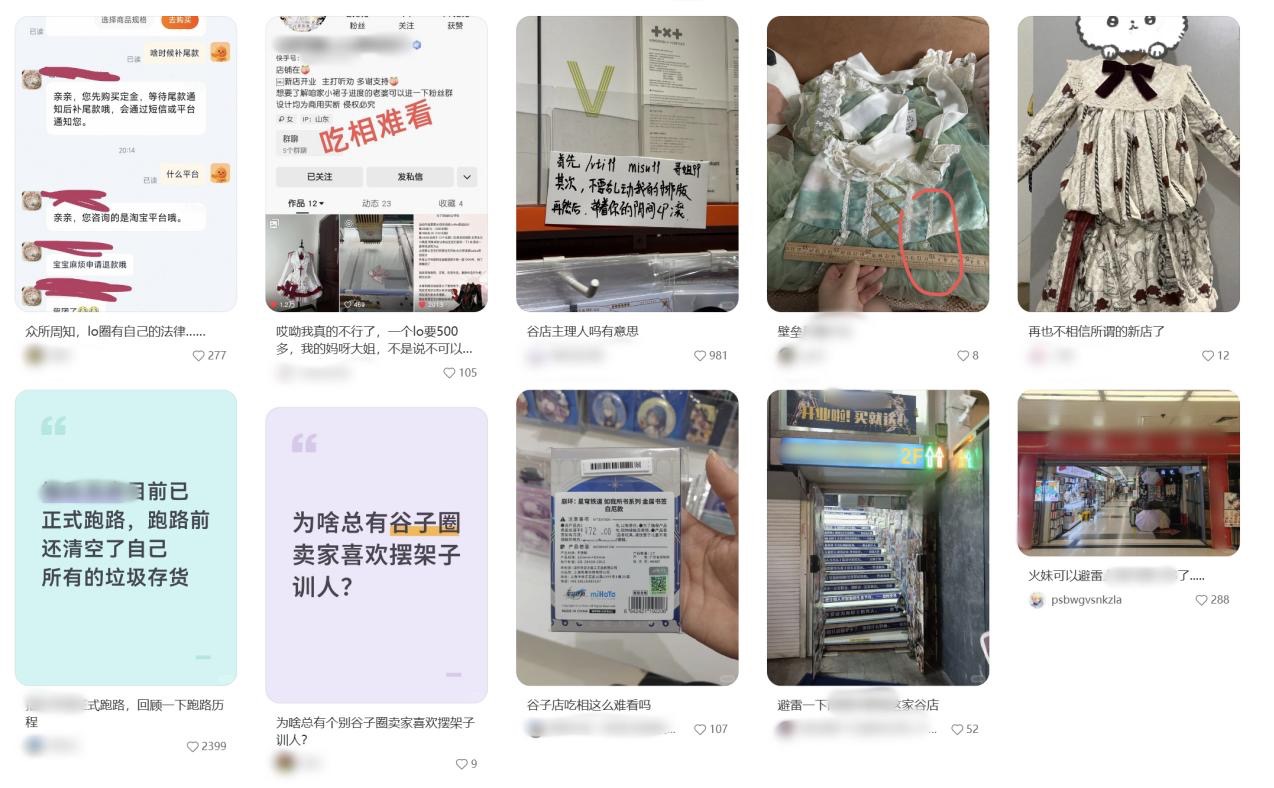
Screenshot of Xiaohongshu
Ai Lan, who has worked in his own millet store for nearly two years, revealed the secret to the Jingzhe Research Institute.
According to Ailan, the store where he works is not directly operated by the brand, and there are no clear standards for product pricing.The prices of popular characters may increase rapidly in line with market trends, while some old models, slow-selling models, and even slightly defective products that have outlived their popularity may not necessarily decrease in price at the same time. For consumers who are new to the industry and lack experience in price comparison,This operation actually gives merchants room to “harvest new people.”
What is harder to find than the price is the “privilege” enjoyed by regular customers.Ai Lan revealed to Jingzhe Research Institute, “Consumers who are close to the boss can go directly to the warehouse, or even directly open the entire box of goods, pick out the style they want, and then put the remaining goods back into the sales process. The problem with blind sampling products is more hidden. The boss will specifically note down some of the styles that have been picked and the remaining popular styles. When the popular and rare styles are still in the pool, he privately picks them out in advance and retains the hot ones. It is impossible for customers to buy them.”
In Aylan’s view,This is no longer just a matter of “unprofessional management”, but a violation of the basic principles of fair trade.“Especially for blind draws, what everyone buys is originally random. If acquaintances can pick the goods in advance and the store knows the remaining styles, it will definitely be unfair to the customers who come to draw normally.”
He also mentioned that many times the problem with individual stores is that “the boss has the final say.” “Today I feel like I can just leave it like this, but tomorrow I may change the way I handle it. As a store clerk, I know it’s unreasonable, but I can only do it.”
Manager’s ideal
To some extent, “manager” is a more attractive identity than “entrepreneur”.The latter means cost, return, management and risk. The former sounds more like having a store that is entirely your own: decorate it according to your own aesthetic, sell what you like, set your own rules, and no longer have to listen to the boss.
The problem lies precisely here.For some young people, the first thing to complete when opening a store is the imagination of “finally being their own boss.” As for where the customer flow will come from, how to calculate costs, and whether things can be sold, they often have to wait until the store is actually opened before making up for it.

In the article “Young People’s New Year, Being Hardly Controlled by Two-Dimensional Handicrafts”, Jingzhe Research Institute interviewed the owner of a DIY support handicraft shop, Ah Chi.
At that time, she wanted to create a handicraft space where star-chasing girls could chat and support each other. However, after it was actually launched, the first problem she faced was the customer flow issue – the store was opened in an office building, and there was no natural mobile customer base for street-facing shops. Most of the customers relied on social platform promotions to come here. , “If the publicity is not adequate for a certain period of time, there will be very few or almost no customers.” Half a year later, when Jingzhe Research Institute visited Ah Chi again, she mentioned that the performance of online group buying coupons was “not very good.” It was not until recent further research that she discovered that the store had been closed for a period of time.
Looking back on this experience, Ah Chi realized that handicraft shops are actually far less relaxing than outsiders imagined:There are more and more peers, and low-price competition is becoming more and more obvious. Projects that mainly focus on supporting items have limited profit margins. Without stable customer flow and a certain degree of popularity, it is difficult to maintain them in the long term. What’s more,Costs should not just be “roughly calculated” before opening a store, but should be broken down into each item of expenditure. “This is the prerequisite for maintaining a healthy operation of a store.”。In the end, under multiple pressures such as customer flow, profits and capital turnover, Ah Chi chose to transfer the store.
In “The average price is 40 yuan, why do young people spend tens of thousands of dollars a year?” “In “Jingzhe Research Institute”, the Jingzhe Research Institute also contacted Butterfly Su, a pinching manager.
What she saw was another situation: the product had not been proven to be bought by anyone, and the manager had already prepared the “ideal store” at once. Butterfly Su revealed, “Some young managers I know well have a ‘grand blueprint’ when they first open their stores. Products, inventory, and packaging must be of high specifications, but they skip the step of testing the market in small batches. In the end, more and more goods are stocked, and the cost is getting higher and higher. There will be many closed stores in our second-hand group, or reselling leftover materials.”

Photo courtesy of Butterfly Cake
What’s more realistic is that even if the product is made, it doesn’t mean that people will naturally see it.Butterfly Su said that nowadays, stories such as “one note explodes sales” and “a stall earns over 10,000 yuan a month” are easily spread on social platforms, but when it is the turn of individual managers to actually operate, it takes time to build products and accumulate customers. In particular, handmade and two-dimensional products are updated very quickly, and the managers have to continue to introduce new products, promote them, and maintain users. High-frequency output itself is a cost that is easily underestimated.
Jingzhe Research Institute also discovered when searching for relevant store reviews on Xiaohongshu,The reasons for failure repeatedly mentioned by young store owners are highly similar: misjudgment in location selection, too much inventory in the early stage, failure to sell unpopular IP, and underestimation of fixed costs such as rent and labor.For example, some people open a store near a school, focusing on the concentration of young customers and relatively cheap rents, but ignore the limited spending power of students and the possible customer flow disruptions on weekends, winter and summer vacations.
Some store owners mentioned in the review that before opening the store, they thought that as long as they continued to promote on social platforms, they would be able to drive online traffic to offline stores. However, they realized after the store actually opened that once the exposure was reduced, the number of people visiting the store would also quickly decline.
However, even if the problem of customer flow is bypassed and the store is opened directly into a commercial complex with a high concentration of two-dimensional elements, it does not mean that a profit is guaranteed. When browsing relevant notes, Jingzhe Research Institute found that some brand stores in the two-dimensional commercial complex have also closed their stores. Some consumers in the comment area pointed to higher rents and operating costs as the reason. Although it is impossible to determine the specific reason for the closure of the store based on reviews alone, it at least illustrates one thing:For individual stores that lack brand awareness and need to handle publicity and attract new customers by themselves, it will only be more difficult to run a two-dimensional store well.
This pressure is also reflected in the number of store closures in the industry. According to statistics from “Gudian Map”,By 2025, the ratio of store closures to store openings in millet stores across the country has reached 1:2, and 14% of new stores failed to survive a year.
Love is the original intention, but it is not everything
The motivations why many young people choose to become “managers” are actually not complicated. Some people really like a certain IP, some enjoy the process of making handicrafts and designing products, and some just want to have a space that runs completely according to their own aesthetics.
The same was true when Ah Chi opened a DIY support handicraft store. Even though the store has been closed, Ah Chi doesn’t think it’s a mistake to start out of interest. In her opinion, as a star chaser herself, it is easier to think from the user’s perspective, and she is more willing to do more in terms of service and experience details. She told Jingzhe Research Institute that compared with ordinary handicraft stores, understanding the needs from the perspective of a star chaser will bring some natural advantages. “Because we want to provide convenience to everyone, many services will be more thoughtful and detailed.”
But after actually experiencing a round of store opening, operation and closing, her understanding of “love” has changed. “When I was about to decide to close the store, I realized that love is not enough to support everything.” Ah Chi told Jingzhe Research Institute.
Butterfly cake has a similar feeling. “I don’t think there is anything wrong with young managers starting from personal interests. On the contrary, in fields such as two-dimensional and hand-made products that rely on aesthetics and creativity, truly liking this thing is an important prerequisite for understanding products and users.” But she later realized more and more clearly that“Making something good” and “keeping this business going” are actually two different things.

She mentioned that she once had “a time when my creative ability was almost exhausted.” “In the past, I thought more about whether the next product could be better and fresher, but when it became difficult to continue creating, I started to think the other way around:Can a product that has already been made be used more fully? Can we increase repurchase and economic returns so that previously invested ideas can continue to generate value and support the next round of creation?It is not enough to make a good product. Only by enhancing compound interest on a single product can we achieve more effective economic benefits and support further breakthroughs in creation.”
This change is actually a process from “creator” to “operator”. The former is used to asking “what else do I want to do”, while the latter must also consider “how can things that have been made continue to generate value”.
The change in business awareness is also reflected in the attitude towards customers.Butterfly Su believes that the status of “fellow enthusiasts” in the two-dimensional business is indeed an advantage, because it is easier for the manager to understand the aesthetic and emotional needs of users, but this sense of intimacy also requires boundaries. “Our ultimate goal is commodity trading, not the ultimate convergence of preferences.” In her view, managers do not need to impose their preferences on every customer, nor should they confront consumers because of different preferences. “Familiar interests are ancillary spiritual gifts outside of transactions, and there is no need to pursue them too much.”
In the final analysis, the real pitfalls of the two-dimensional managers may not be “too much love”, but that they prematurely regard love as the basis of entrepreneurship and ignore the essence of business operations.Interest can determine why a person sets out. When it truly becomes a business, whether it can go further will ultimately have to be tested by industry rules.
For more exciting content, please visit Shuying.com – Article Channel – Project Channel – Recruitment Channel