For the JRPG genre, turn-based combat, career growth, attribute conflicts, and royal adventures that promote the development of the story are all familiar components.
If you only look at the combat interface, ETERNAL ANIMA developed by Marvelous can easily give people a similar impression: the enemy and ourselves line up in formation, the player selects skills for the character, and then determines the attack target based on the enemy’s attributes and position. Coupled with the classic elements of occupations, weapons, and attributes, I originally thought that this would probably be a fairly traditional JRPG.

During TGS2026, I had the opportunity to experience some of the content of this game. It wasn’t until I actually started using it that I realized that I had thought of it too simply.
This trial lasted about an hour, from the exploration of the forest to the final fight with the powerful BOSS. What surprised me most was not how many familiar JRPG elements it used, but its use of a common “action bar”, which completely changed the way I think about turn-based combat.
To put it simply, it is definitely a JRPG that makes me feel “brightened”.
Travel through time and space to find the truth
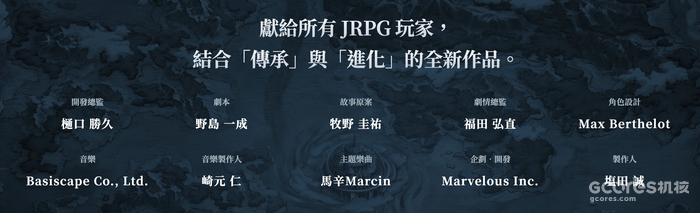
Judging from the lineup of the development team, “Eternal Ripples” can indeed be called “luxury”: Higuchi Katsuhisa serves as the director of this work, Nojima Kazunari is responsible for the script, Makino Keisuke provides the original story, and Fukuda Hironao serves as the script director. The character design is by French designer Max Berthelot, and the music production is by Basiscape, with Hitoshi Sakimoto serving as the music producer. Whether it’s plot, art or music, this list of creators is enough to make players look forward to this game.
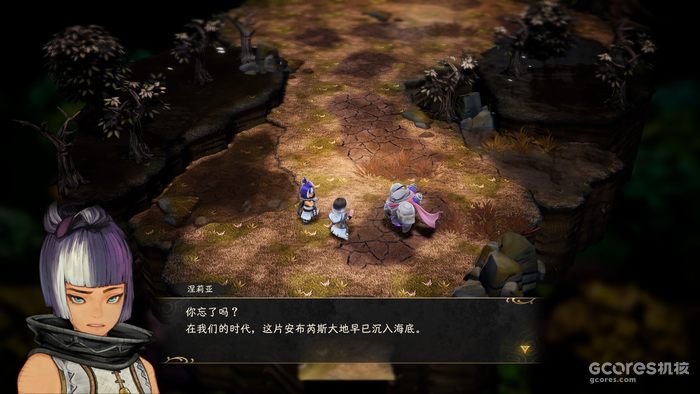
The content of this trial is roughly the beginning of Chapter 3. The protagonist Wade, his companions Nelia and MOS stepped into the lush forest, only to find that the plants here were gradually withering, and the concentration of “spiritual ripples” in the air was also constantly decreasing. Nelia told Wade that in their era, the land of Ambris had already sunk to the bottom of the sea. In order to prevent this result from happening, everyone came here through time and space, trying to find out the cause of the forest’s decline.
During the investigation in the forest, Wade and his team met Malti, a young man from Tarini village, and worked with him to find the cause of the forest’s decline. Although this trial has not revealed the truth about the decline of the forest, it is not difficult to see from Nelia’s explanation that what they are trying to change is not just the anomaly in front of them, but to change a greater disaster that has already happened in the future.
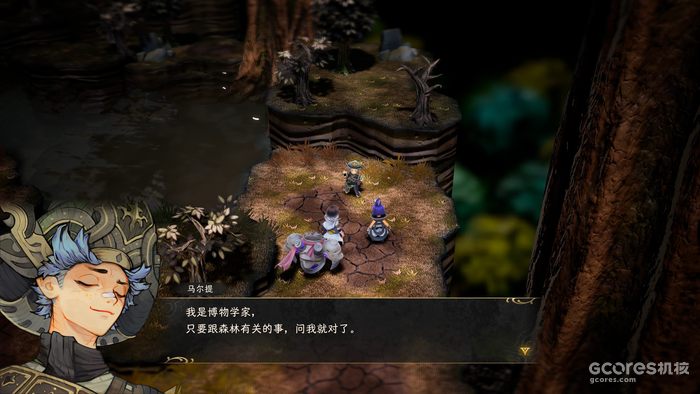
During the process of exploring the forest, I found that the graphics of the game are somewhat “different”: this game uses 3D Q-version characters. The proportions of the characters in the actual scene are relatively cute, but the character paintings show another more personalized style – Max Berthelot, who is responsible for the character design of this game, has participated in works such as “Terra Battle” and “Lost Hellden”. His designs are not limited to a single painting style. The characters are often recognizable through clothing, accessories and detailed shapes, while retaining some of the texture of hand-drawn illustrations.
Looking at “Eternal Spirit”, these distinctive character paintings form a very interesting contrast with the 3D Q version image, and also give this game some more visual features in addition to the familiar Japanese RPG framework.

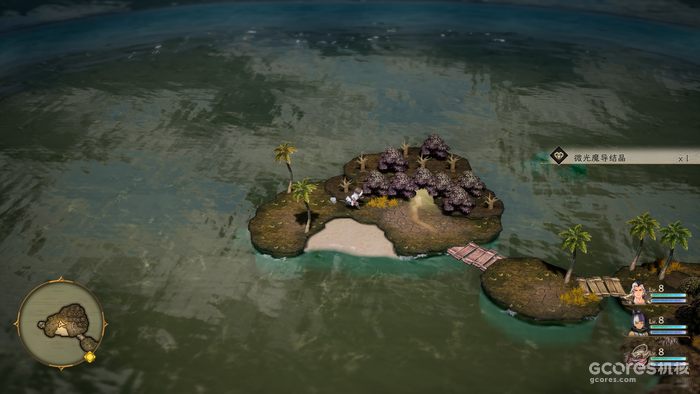
The map is also in full 3D form, and the lush forest scenes are rich in details. However, this time I basically followed the mission route and didn’t have much time to explore in depth. In addition to investigating the anomalies in the forest, there are also some items worth looking for scattered around the map, including weapons left behind by past heroes.
And these weapons happen to be an important part of the character growth system of “Eternal Spirit”.

In order to save the future, we must first understand the past
In “Eternal Ripples”, the protagonist Wade has a special ability called “think reading”, which can read the remaining memories of objects and understand their past owners. In the lush forest, I found a weapon left by past heroes. After learning the story of its owner through mind-reading, Wade can inherit the profession corresponding to this weapon.

This creates a direct connection between exploration and character growth. What players find is not just a new piece of equipment, but a new way to fight. Wade is the only character who can equip two weapons at the same time, and the two weapons correspond to two professions. Players can switch weapons and change their attack methods according to the battle situation.
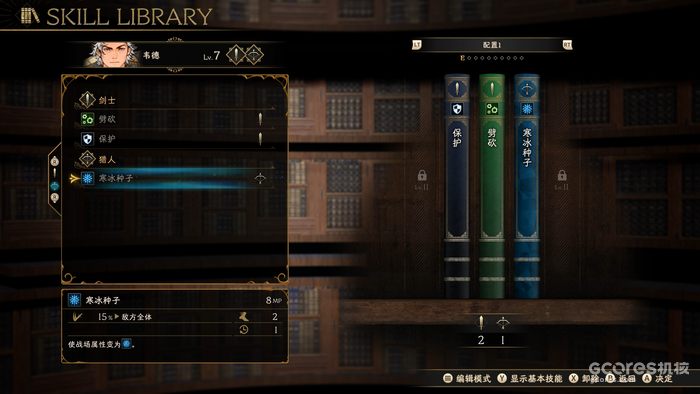
For example, the “Hunter’s Bow” obtained this time allows Wade to directly attack the enemy’s back row. In this game, enemies are usually divided into front and rear rows. Conventional attacks need to deal with targets in the front row first, but some long-range skills can bypass this restriction. Therefore, when the enemies in the back row are more difficult, switching to the hunter profession to deal with the back row directly becomes a very practical choice.

Each profession also has its own corresponding skills. For example, swordsmen can use skills such as “protect”, and hunters can shoot ice arrows. Players can freely configure these professional skills, but during the trial stage, each character can only equip three skills. As the level increases, the number of skills that can be equipped will increase. In other words, obtaining a new profession does not mean that the character can only use a fixed combination. Players can still freely configure skills according to their own tactical ideas.
Another interesting point is that the teammate MOS does not have a clear weapon, because it is set as a robot, so players can adjust its accessories to let him take on duties such as output, treatment or tanking. However, this part of the content is not available in the trial version yet, so it is not yet known what the real strength of this character is.
At least from what I have experienced so far, the career growth in “Eternal Spirit” is not difficult to understand – find weapons, read memories, inherit careers, and then configure skills as needed. And professions and professions also complement each other, and they will directly affect the process of combat. As for whether there will be more types of occupations and skills in the future, let’s wait and see the official version.
I predicted your prediction
As I mentioned at the beginning of this article, at first glance, the combat in Eternal Ripples looks like one of those traditional turn-based RPGs with an action bar. Players need to choose actions for their characters, and then observe the next action arrangements of the enemy and ourselves through the action bar. Whether it is the interface or the combat flow, it does not seem to be much different from those works that can preview the sequence of actions.
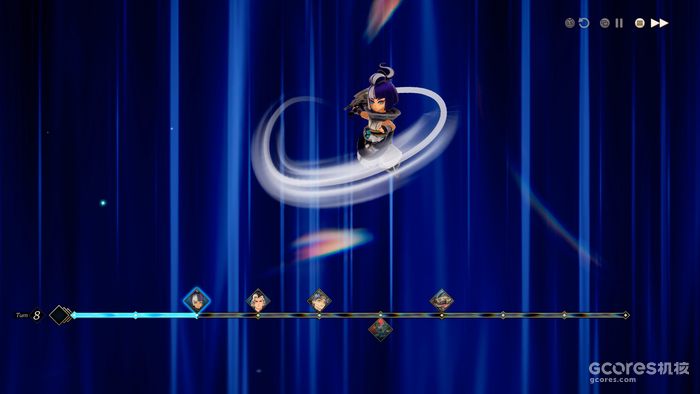
However, the action bar in this game does not just show who moves first and who moves last. After the player selects an action for the character, the character will appear in the action bar, and the possible results of this action will also be displayed: how much damage is expected to be caused, whether a critical hit can be triggered, the order of the enemy’s actions, who the enemy is going to attack next, and how much health is expected to be lost after being hit.
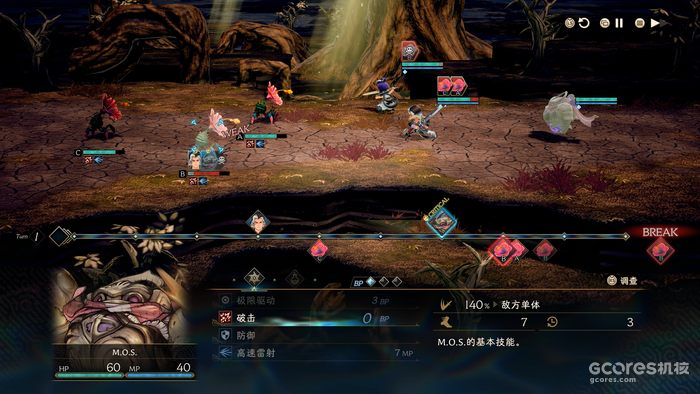
However, the order in which the instructions are arranged does not represent the actual order in which the characters take action. Instead of simply arranging the characters from front to back and watching them execute instructions in order, players must judge how their instructions will affect the subsequent battle based on the information presented in the action bar.
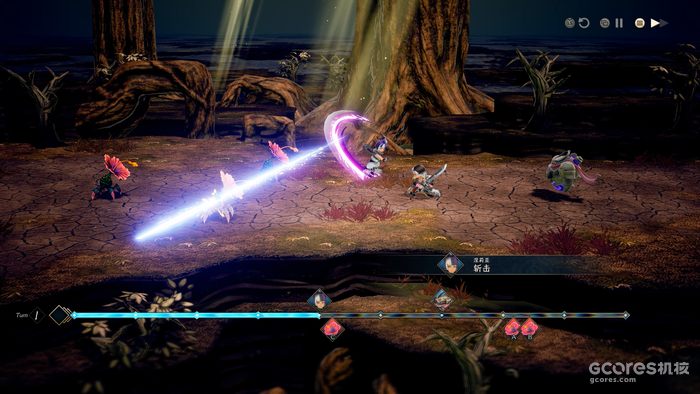
Judging from the text description alone, this system seems to only display more combat information, but after actually getting started, I discovered that the difference between the two is far more than that.
Because players can not only see what the enemy is going to do next, but also change its plan through their own actions: attacking the enemy can delay its actions. If the delay is enough, knocking the enemy out of the action bar will also put it into a defense-breaking state. At this time, the attack that the enemy was planning to launch will be cancelled, and he will be stunned for one round.
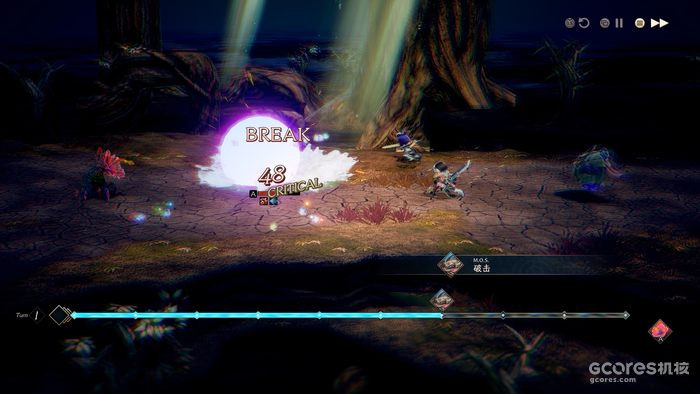
To delay an enemy more effectively, it’s especially important to target its weak points. This is also where attribute conflict comes into play in this game: it not only allows players to deal higher damage, but also relates to whether they can control the enemy’s action rhythm faster.
As for skills, in addition to normal attacks, the time consumed by different skills is different. In addition, some consume MP and some consume BP; some are more damage-oriented, while others are better at delaying the enemy. BP can be accumulated through attacks, defenses, and defense breaks during combat, and can be used to enhance the power of skills or further increase the delay range. After the BP reaches 3 bars, you can also activate the character’s special move, which is very powerful.
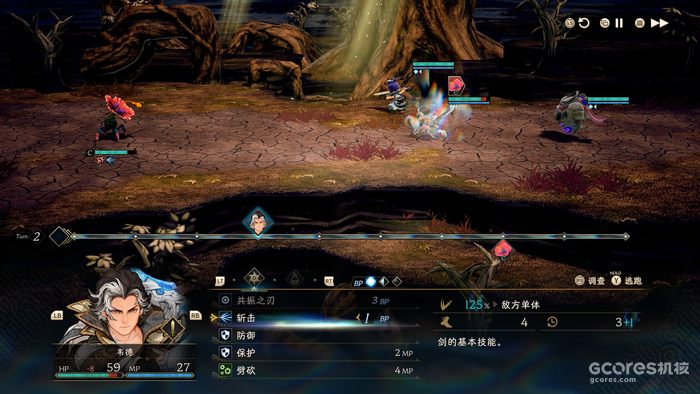
However, enhancements can only be used during the current turn, so players still need to decide when to invest BP. Should we increase output when the enemy is about to break through its defenses and deal with it as soon as possible? Or should we continue to strengthen the delay and try to make the enemy unable to move for a longer period of time? These choices do not break away from the traditional turn-based skill management, but they have more meaning because of the appearance of the action bar.
The enemy’s front and rear row settings also reflect some strategic fun: facing threatening enemies in the back row, players can use bows and arrows or other long-range skills to attack directly; if their own characters are about to be attacked, they can also rearrange their tactics to prioritize the enemy’s long-range units, or use taunts to attract firepower and let designated characters bear the attack to protect other members of the team.
Sometimes, the skill with higher damage at hand is not the best choice. Actions that can delay the enemy’s actions and prevent teammates from being harmed may be more valuable.

This feeling is indeed different from a turn-based RPG that simply looks at the sequence of actions. The information provided by the action bar is not used to simply confirm the sequence of actions. Players need to constantly refer to it and then modify the action bar bit by bit according to the changes brought about by the instructions until they get to the state they want.
Therefore, in “Eternal Spirit”, players no longer only consider how to output the highest damage in a round, but also whether their actions can change the enemy’s plan, and how to use these changes to create a more favorable situation for the subsequent battle.
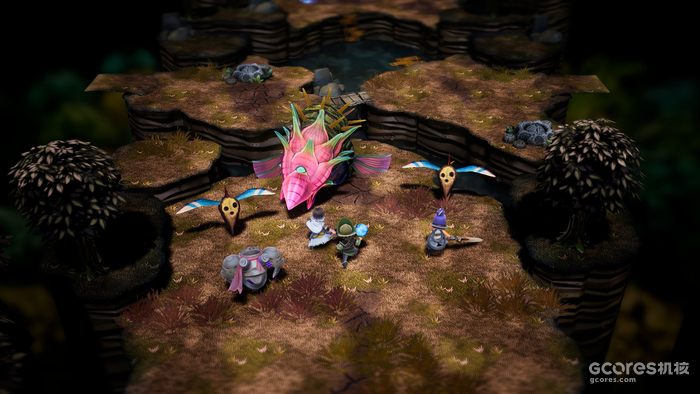
At the end of this trial, I challenged a powerful BOSS guarding the sacred tree. Its health is quite high and its attacks are very ferocious. It is not easy to end the battle as quickly as possible simply by relying on damage.
Unlike ordinary enemies, BOSS will hide its weaknesses through fixed actions. Players need to carefully observe its action patterns to find more effective ways to deal with it. If you only focus on the output and fail to judge in time what it is going to do next, it is likely to be directly defeated by high damage.
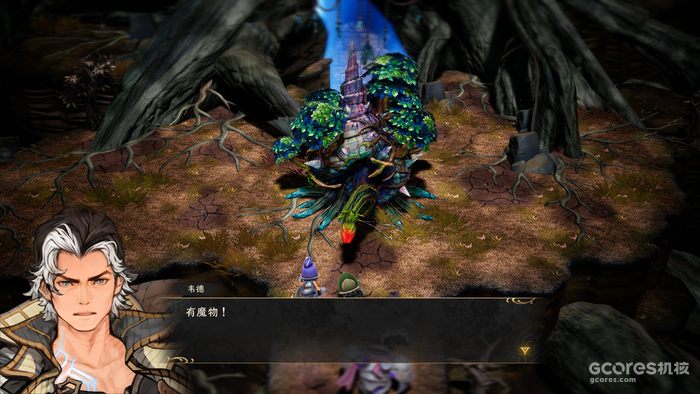
Facing such an enemy, it is difficult for me to rely solely on a familiar set of skills to output all the way. Instead, I must find a breakthrough by combining weaknesses, action delays, and defense-breaking mechanisms. When to attack with all your strength, when to prioritize accumulated delay, and how to respond to the upcoming offensive, these decisions all need to be continuously adjusted based on the information displayed on the action bar.
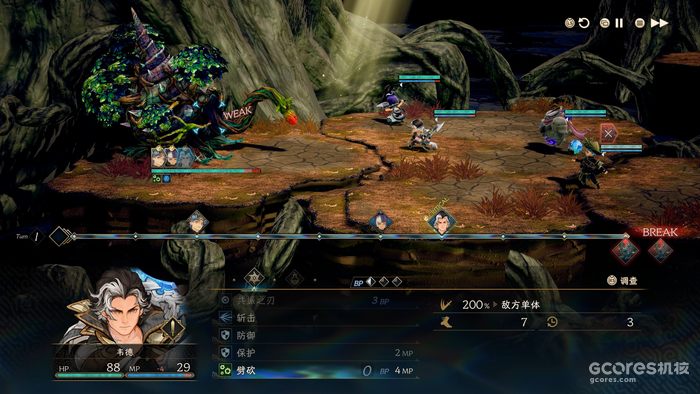
Although the battle was a bit difficult, after more than ten rounds of fierce fighting, I finally won. In the duel with a strong enemy, I feel that this game does not want to increase the difficulty by simply increasing the enemy’s health and attack power, but hopes that the player will carefully examine the value and consequences of each action in front of a strong enemy.
Even if there is a significant numerical gap between the enemy and ourselves, as long as the player can observe the enemy’s movement patterns and use delays and defense breaches to create output opportunities, players still have the opportunity to take the initiative in the battle.
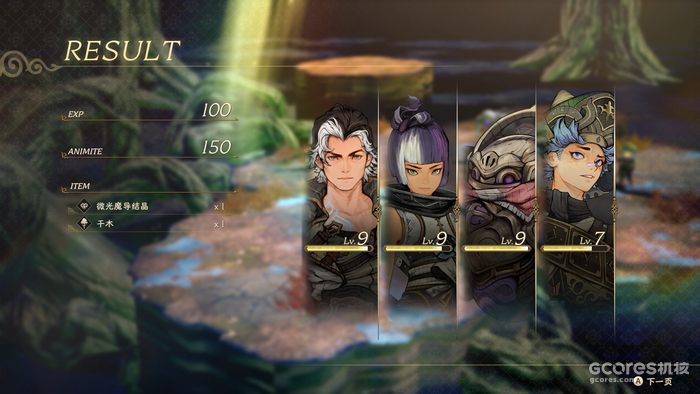
Conclusion
Of course, the short trial experience is not enough for me to judge how much changes “Eternal Spirit” can bring in the later stage. As the types of enemies, occupations and skills gradually increase, whether this combat system can always maintain enough strategic space will need to be verified after the full game is released.
However, what interests me most about this game is its rethinking of traditional turn-based combat – professions, skills, attribute conflicts, and action bars are not unfamiliar, but when action delays and defense-breaking mechanisms are added, players have more room to intervene in enemy actions and change the rhythm of combat.
After just an hour of trial play, I could already see the potential of this system. After more professions, skills and powerful enemies gradually appear, how many unexpected combat experiences can “Eternal Ripple” bring around this seemingly ordinary action bar? This may be the reason why I am most looking forward to the launch of the official version now.