source:bitumen
Catering companies already have a set of standard answers for growth today.
If there are not enough stores, we will open franchises;
If you are not satisfied with dine-in, you will go online for takeout;
When customer flow drops, resort to group buying, live broadcast coupons and low-price packages.
From 100 to 500, and from 500 to 1,000, it seems that as long as there are more and more stores and GMV gets bigger and bigger, the brand will move forward.
But one company took the initiative to abandon these paths.
It does not open franchises, does not do takeout, does not engage in group buying, does not rely on long-term discounts and promotions, and rarely relies on advertising and live broadcasts to buy traffic.。
In 2018, it only opened 148 directly operated stores.
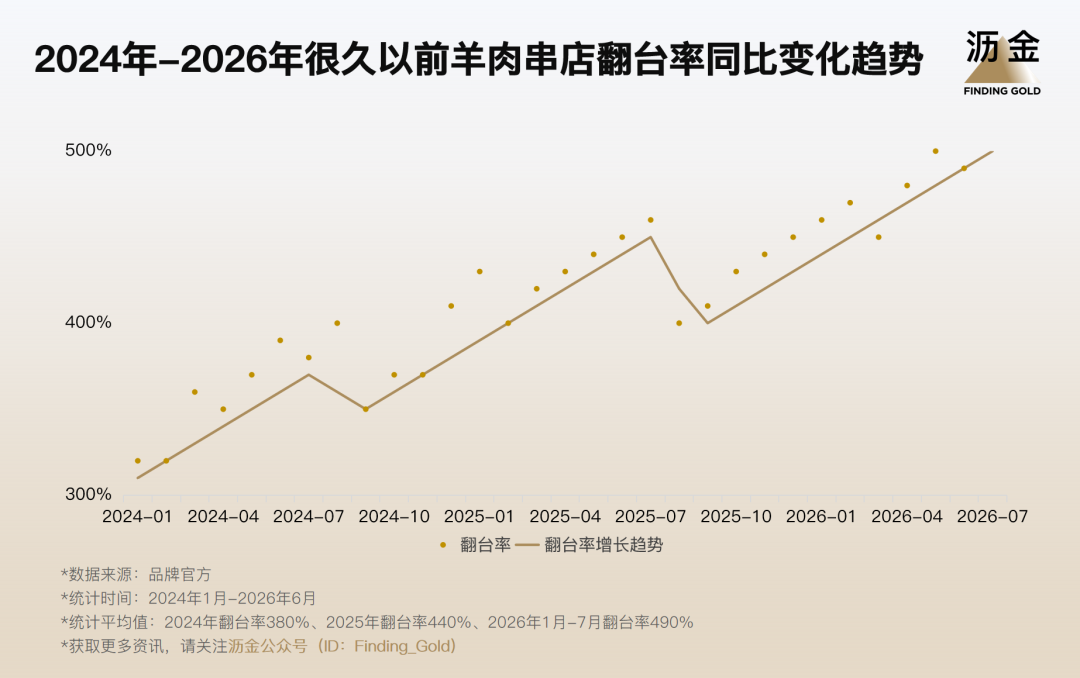
But in 2025, its same-store revenue still achieved double-digit growth;
From January to July 2026, the average single store turnover rate can be as high as 4.9 times per day.
Recently, it also completed its shareholding reform and introduced executives from Black Ant Capital and Jue Fund as directors, attracting outside attention to its IPO.
It is the originator of Internet celebrities in the skewers industry——Lamb kebabs a long time ago.
But what is really worth studying by restaurant owners is not whether it can become the first barbecue stock. But if it doesn’t rely on franchising to increase stores, doesn’t rely on takeout to increase channels, and doesn’t rely on discounts to increase customer flow, how can a catering company grow?
There is only one answer given a long time ago——Make a store’s business prosperous.
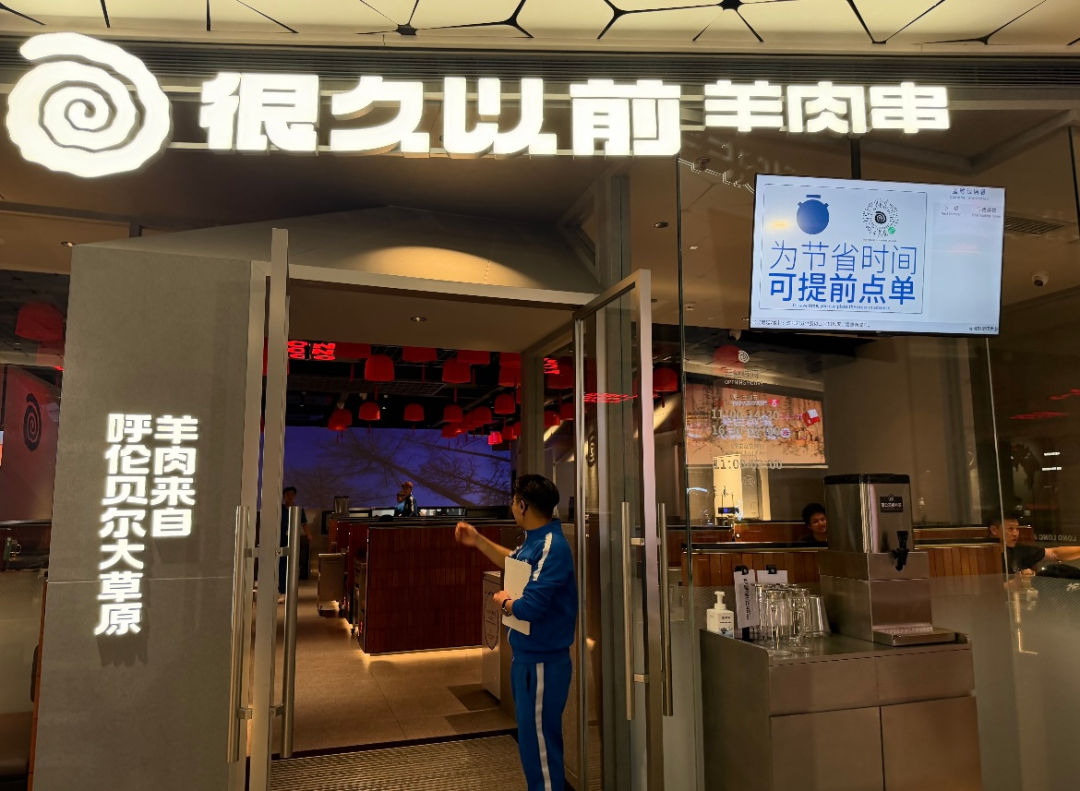
A long time ago mutton kebab store, source: Internet
Give up using “many stores”
prove yourself
A long time ago, people were not born slow.
In 2016, the company already had 36 stores and a turnover of more than 200 million yuan, which is already a good growth curve.
However, founder Song Ji later recalled that at that time the company could not even pay wages and did not have enough funds to pay suppliers.
This is a very typical catering trap, that is, revenue scale does not equal business quality.
A store with a revenue of 5 million yuan but no profit will not suddenly become a good company even if it is copied 100 times;
A brand has a net increase of 300 stores this year. If the customer flow of old stores declines, single store revenue declines, and the payback cycle lengthens, this growth will also be fragile.
The number of stores, because it is the most intuitive, is precisely the indicator that restaurant owners are most likely to overestimate.
From 10 stores to 100 stores, everyone can see it; but a store’s repurchases increase by a few points, the number of turnstiles is increased by half a day, and employee turnover decreases by a few percentage points, which is far from the sexy value of breaking through a thousand stores.
But what really determines whether a company can survive for a long time is precisely these unsexy data.
This is also the meaning of insisting on direct operation a long time ago.
Although direct operation is an asset-heavy model, rent, decoration, labor and operating costs are all borne by the headquarters itself. But it also sets a very cruel business constraint.That is to say, if a store is not good, it cannot be left to the franchisee; if the location is wrong and the operation is poor, the headquarters will bear the consequences.
in other words,Direct sales force companies to reduce the space for explanation.
If there are few stores opened, the outside world may question the slow growth;
But every time you open a store, you must answer: Is this store a good business?
The problem behind this is,Should companies pursue “visible growth” or “valuable growth”?
The former is easier to create numbers and stories, the latter is slower and more stable.
In 2017, not even a new store was opened a long time ago, but the original 36 stores were re-established. According to Song Ji’s later statement, the company’s cash flow turned positive about a year later, wages and supplier accounts returned to normal, and then debts were gradually repaid.
When to open the next store is itself part of the business capability.
Being able to open a store is important, but knowing when not to open a store may be even harder.
Because for a boss, the biggest temptation is often not to lose money, but to seem to be able to continue to grow.
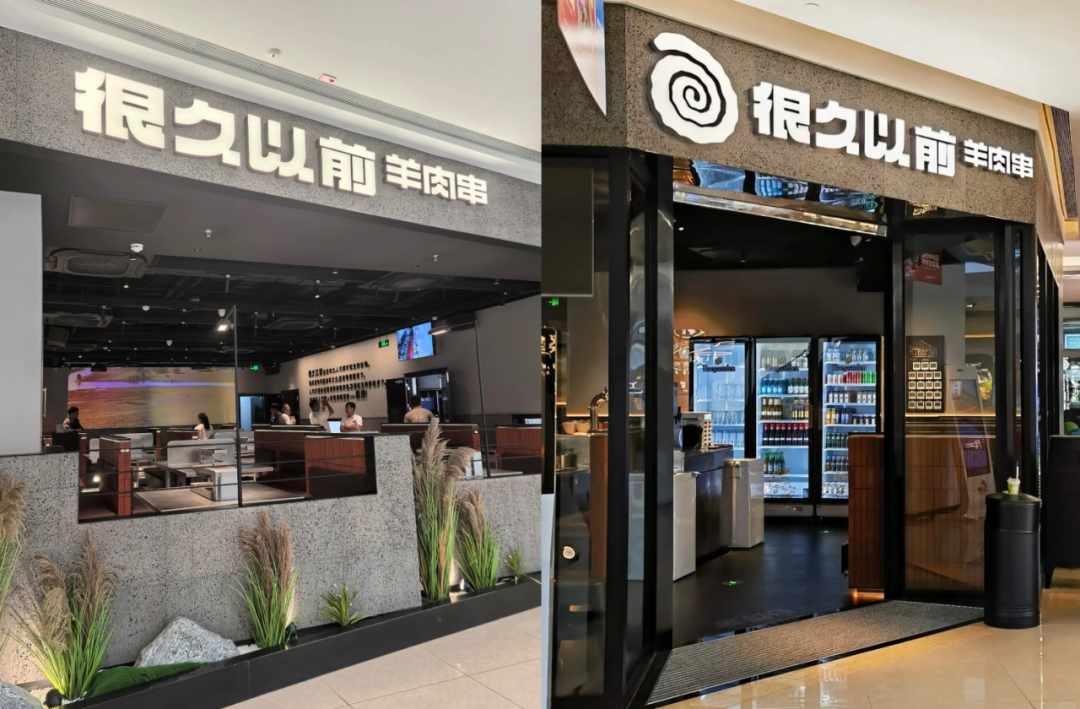
A long time ago mutton kebab store, source: Internet
No discount
Protecting the brand mind
What is more counter-intuitive than not opening a franchise is the attitude towards discounts a long time ago.
The business boundaries proposed by Song Ji includeThere will be no group buying, discount promotions or commercial advertisements. Later, items such as no stored value and live streaming sales will be added.

A long time ago, there was a poster showing that mutton kebabs would not be discounted unless group purchases were made. Source: Brand official
This is certainly not the answer for every restaurant brand.
Song Ji himself also mentioned that a 10% discount will not automatically bring about a 10% increase in turnover. Long-term reliance on discounts may also lead operations step by step into logics such as “price increases followed by discounts, high gross profit packages”.
But the real danger is not that you earn 10 yuan less, but that consumers begin to form a habit of not being able to buy at the original price.
100 yuan today, 69 yuan in the live broadcast room;
89 yuan in store, members get an additional 20 yuan off;
There may be a 50% off coupon next week.
As time goes by, 100 yuan is no longer the real price, it is just a number waiting to be struck off.
Promotions make a qualitative difference, but not all revenue is of the same quality.
In the beginning, it was a customer acquisition tool; later, it became a fixed cost to maintain basic customer flow.
Although the original price income and the income after subsidies are both called turnover on the surface, the consumer relationship behind them is completely different.
A customer who is willing to pay the original price is buying the product and brand;
A customer who only shows up when there is a 50% discount will first buy at a low price.
This is why the per capita customer order of about 90 yuan a long time ago deserves more attention than the high price.
What it really wants to defend is not the price range of 90 yuan, but that consumers still think 90 yuan is worth it.
For consumer brands, price is never just a number, price itself is also a relationship.
Once a company needs to constantly use discounts to explain its value, it means to some extent that the product can no longer convince consumers independently.
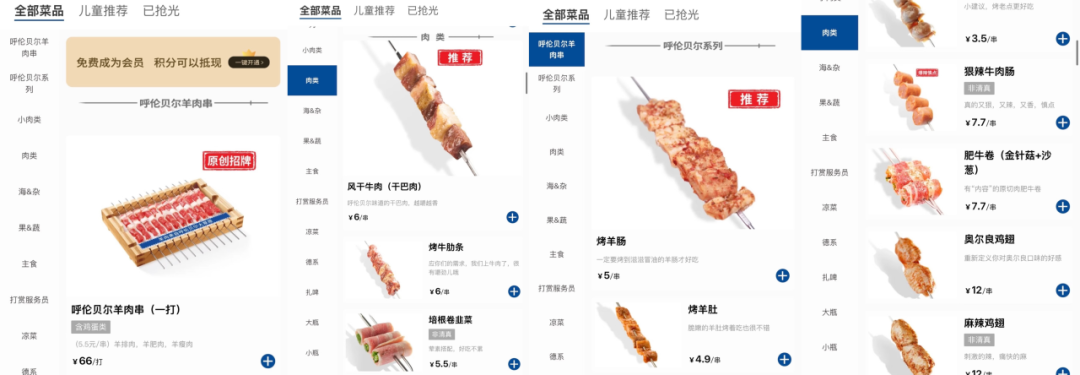
Part of the long-ago mutton kebab menu, source: Brand Mini Program
No takeout
Because what you earn is not efficiency money
The same logic can also explain why we stopped doing takeout a long time ago.
From an efficiency perspective, this choice is somewhat irrational. After all, the kitchen is already open and the employees are already at work. If you make more takeaways, you will get more income; it can also break the physical radius of the store and improve kitchen utilization.
But there is an issue in catering that is easily overlooked.Different categories don’t earn the same kind of money at all.
Fast food mainly makes money from convenience, and consumers want to be closer, faster, and more stable; but barbecue naturally has another layer of attributes, namely gatherings with friends, drinking and chatting, night consumption, and a relatively long stay.
What was really done in the early days a long time ago was not to simply grill the mutton skewers to a more standard level.
It brings traditional roadside barbecue indoors and packages a highly fragmented category into a complete nighttime consumption scene through a smoke-free environment, automatic rotating oven, grilling, lighting and music.
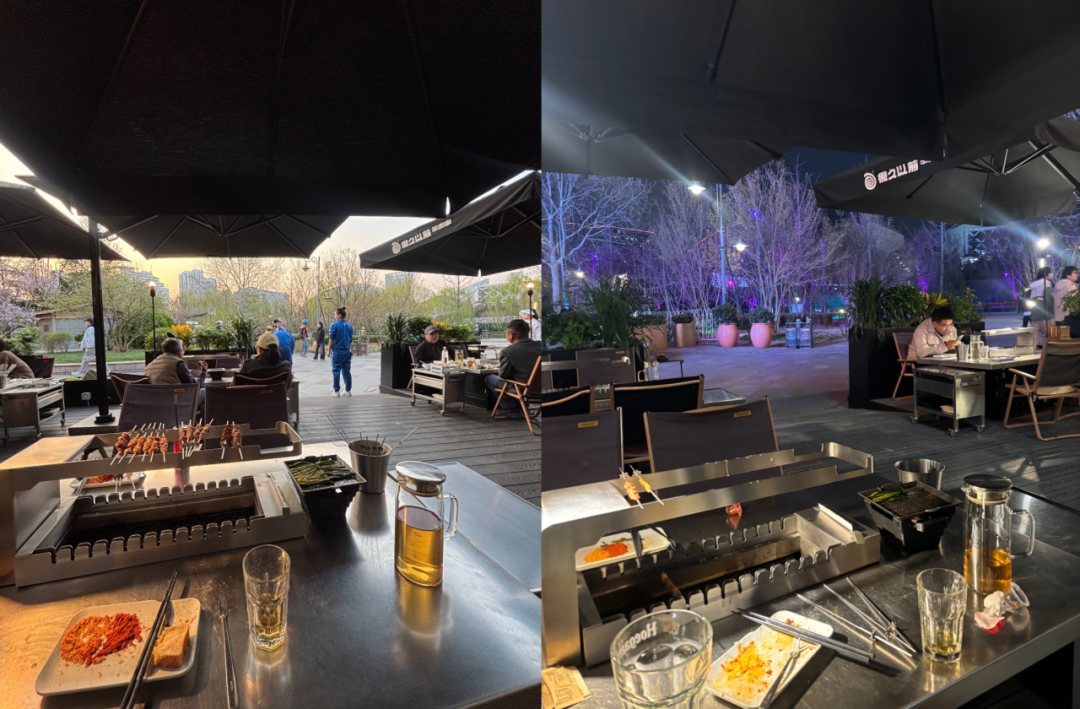
The outdoor environment of the mutton kebab store in Beijing a long time ago, source: Internet
Therefore, the 88 yuan that consumers pay is not all about the mutton, but also includes space, services and social interaction.
If you put the skewers in a takeout box, a chunk of that value will disappear in an instant.
What consumers compare will also change. In the store, the comparison is “Where to eat tonight?”; on the takeout platform, the comparison is “Why is this box of meat more expensive than the next door by 15 yuan?”
The competitive dimension instantly changes from brand and experience to product and price.
Efficiency is not the ultimate goal of business.
Efficiency is just a means, and the real goal is to make consumers willing to continue paying.
If a certain inefficiency constitutes the reason why customers pay, then optimizing it is not necessarily progress.
Why are the lobbies of high-end hotels so big?
Why do cafes allow customers to sit for two hours?
Why does hot pot still need a large number of service staff?
Because some costs that seem to have no direct output are themselves producing experience.
Therefore, what is really difficult about catering operations is that not all places need to improve efficiency. Rather, it is necessary to distinguish where efficiency should be maximized and where redundancy must be retained.
If you make convenience money, you should be extremely efficient; if you make scene money, you cannot eliminate all inefficiencies.
The problem with many brands is not that their operating efficiency is too low. Instead, we have optimized away the things that consumers were willing to pay for in the past.
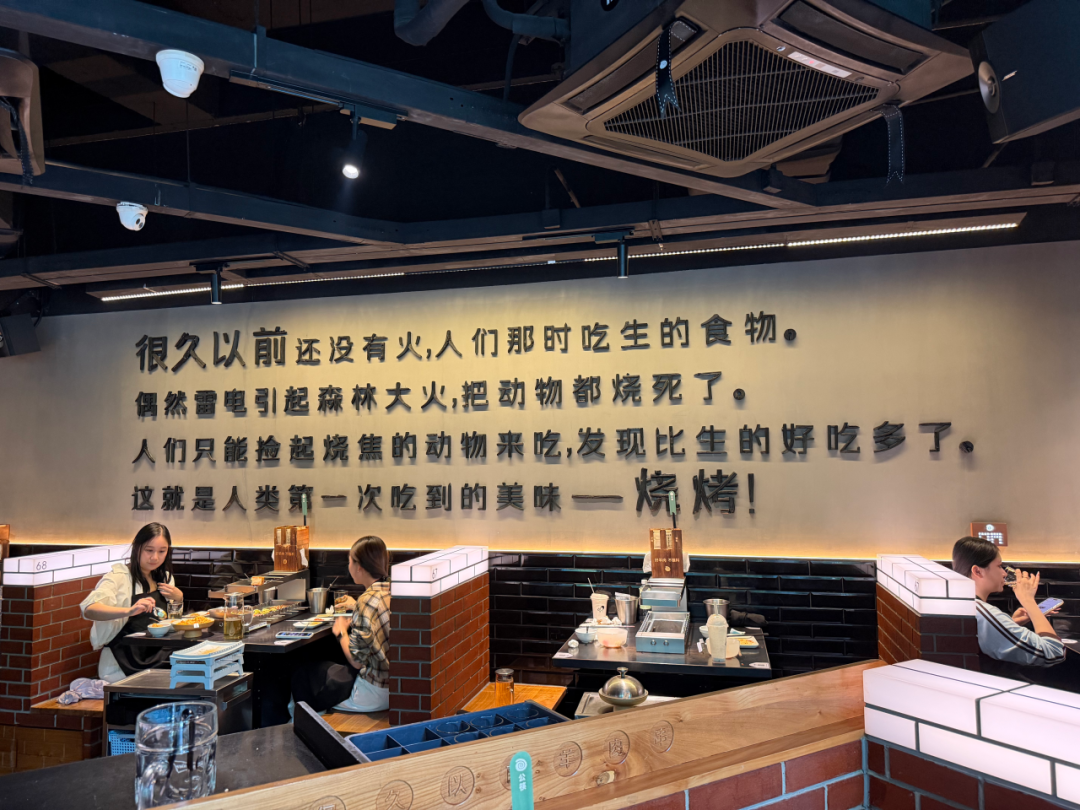
The indoor environment of a mutton kebab store a long time ago, source: Internet
Others rely on new stores to grow
It relies on old stores to grow
If a restaurant chain wants to increase its revenue, the easiest way is of course to open stores.
There were 100 stores last year and 150 stores this year. As long as new stores contribute revenue, the total market will naturally become larger.
But this growth can easily mask ongoing problems at older stores.
Assuming that the number of stores increases by 50% and revenue only increases by 30%, the company as a whole can still announce growth, but on average for each store, operating efficiency has actually declined.
Therefore, for mature catering brands, the most important data to look at is same-store growth.
Why is same-store growth difficult?
Because opening a new store can be solved with capital. Renting a shop, decorating it, and recruiting people can create a new source of income.
But if a store that has been open for three or five years wants to continue to grow, it can only rely on a few things: customers come more frequently, new customers continue to come in, the store is improved, and the product mix is improved.
In the final analysis, it depends on the business itself.
Catering growth is divided into two levels, the first level is scale growth, and the second level is endogenous growth.
Scale growth proves that the company has the ability to replicate, and endogenous growth proves that consumers continue to choose you.
Both are important, but the latter is often harder to fake.
If a brand must continually open new stores to sustain growth at the corporate level, it may have become essentially dependent on new supply. And if not many new stores are opened, the original stores are still growing, indicating that the brand itself is still creating demand.
A truly good business should not always rely on the next store to save the previous one. Otherwise, once the company stops expanding, its growth will stop at the same time.
That’s not compound interest, it’s more like refilling the glass.
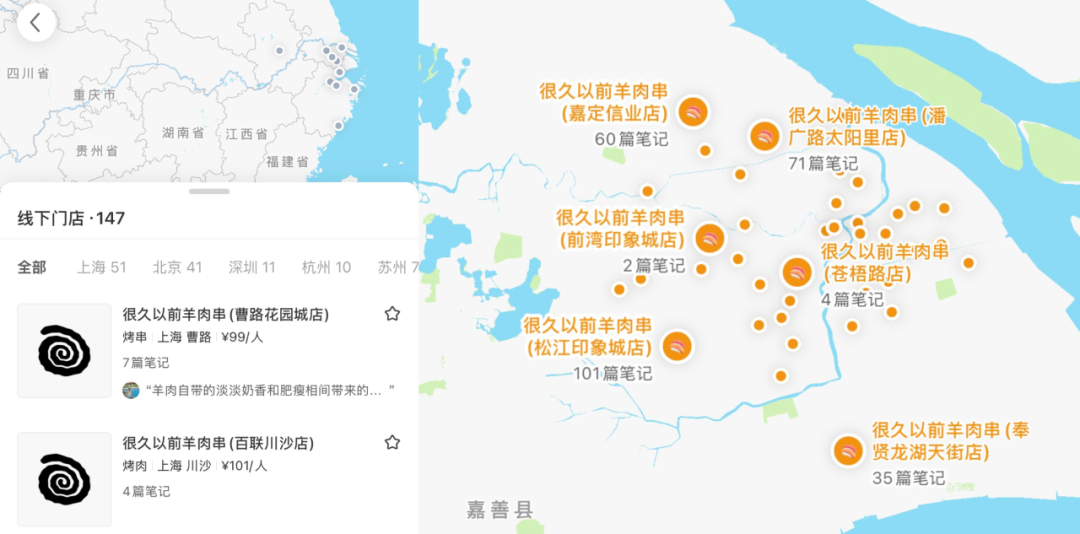
Store distribution in Shanghai a long time ago, source: official account
Don’t do it
Sometimes it’s more important than doing
A long time ago, it was most likely to be blindly learned by bosses.
When I saw that it didn’t do takeout, I thought I didn’t want takeout either;
If you see it is not on sale, stop the offer immediately;
When I saw that it didn’t join the franchise, I felt that direct operation must be more advanced than franchising.
The most valuable thing to learn from a long time ago is its very simple and even somewhat anti-Internet business philosophy——Enterprises don’t need to do everything, but they need to know what they rely on for a living.
There are two sides to any business move.
Joining brings speed, but may also weaken control;
Takeout may result in loss of scene value in exchange for orders;
Discounts gain customer flow, but may also result in loss of price credit;
Opening a store quickly increases scale and may also increase management complexity.
There is no free growth in the world, but there are many costs of growth that will not be immediately reflected in the income statement.
Many companies lose not because they cannot grow, but because they are unwilling to give up growth.
I want to do anything through any channel; I want to make any money; I want to enter any market; I don’t want to miss out on any consumer. In the end, the brand often becomes more and more blurred, the organization becomes more and more complex, and the profits become thinner and thinner.
A truly mature company will gradually form its own boundaries.You know what money you should make, and you also know what money you shouldn’t make even if it’s right in front of you.
This is the part worth studying a long time ago.
Rather than rejecting business, it is making a more stringent business choice.
First determine your core profit source, and then avoid other growth methods from destroying it.
Without opening a large number of new stores, relying on long-term discounts, or relying on incremental takeout, we have long ago succeeded in allowing consumers to consume at normal prices, allowing old stores to continue to grow, and allowing each store to create more value.
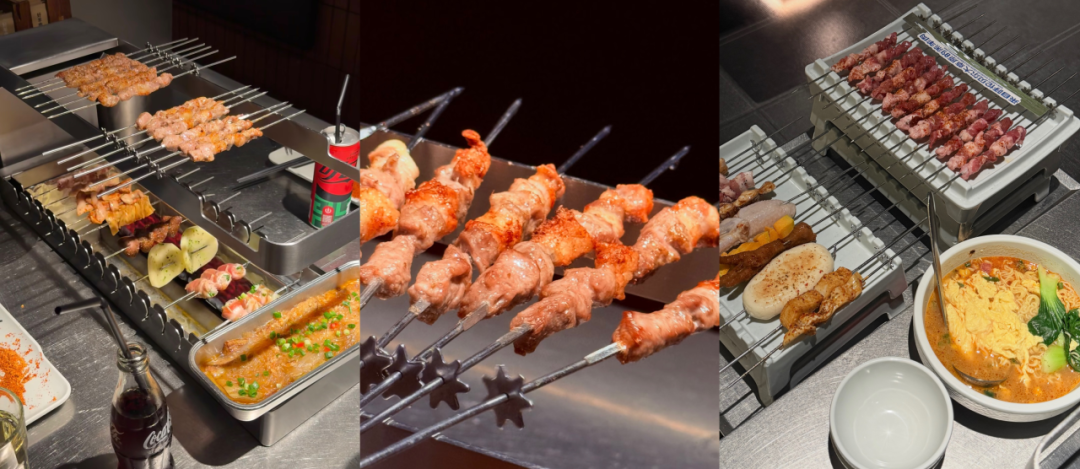
Real photos of mutton kebab dining a long time ago, source: Xiaohongshu
Whether this method can be replicated from 148 to 300 or 500 companies remains to be verified. But it at least raises a question that is worth thinking about in the current catering industry.
After the 1,000th store is opened, why is the first store still worth existing?
Because opening a store solves the problem of scale. If a store has been open for five or ten years and there are still people queuing up and it can still make money at normal prices, the solution is the brand and management.
Really good growth is not about having more and more stores. But as the number of stores increases, each store still does not become thinner.
Author’s public account: Li Jin (ID: Finding_Gold)
For more exciting content, please visit Shuying.com – Article Channel – Project Channel – Recruitment Channel